《Professional Interpretation & Dietary Applications of Water Chestnut》
1. Nature, Taste, and Meridians
Nature & Taste: Sweet in taste, slightly cold in nature.
Meridians Entered: Primarily enters the Lung, Stomach, and Large Intestine meridians.
Professional Interpretation:
Water chestnut has a sweet taste that nourishes Lung and Stomach Yin, and promotes the generation of body fluids to relieve thirst. Its slightly cooling nature enables it to clear heat, transform phlegm, cool the Blood, and detoxify the body. By entering the Lung meridian, it clears Lung heat and transforms phlegm; by entering the Stomach meridian, it generates fluids, benefits the Stomach, aids digestion, and alleviates food stagnation and abdominal bloating; through the Large Intestine meridian, it moistens the intestines, promotes bowel movements, and cools the Blood to stop bleeding. Due to its cooling tendency and crisp, juicy texture, water chestnut is traditionally known as the “the snow pear beneath the soil.” It is especially effective in clearing heat from the upper and middle burners.
2. Core Concepts in Traditional Chinese Medicine (TCM)
Underlying Core Mechanism and the Origin of Its Reputation as a “Cooling & Moistening Fruit”. In TCM, the Lung is considered a delicate organ that prefers moisture and dislikes dryness, while the Stomach, classified as Yang Earth, likewise prefers moisture and dislike dryness. When pathogenic heat or dryness invades the body, it readily damages the fluids of the Lung and Stomach, leading to symptoms such as dry cough, thirst, and constipation.
Sweet and cooling to generate fluids:
Its sweet taste nourishes and supplements, while its cooling nature clears heat. Being rich in natural juices, water chestnut can directly replenish depleted body fluids, clearing heat without damaging Yin, and moistening dryness without causing cloying stagnation.
Transforming phlegm and resolving food stagnation:
Its slightly cold nature helps transform heat-phlegm in the Lung. In addition, its high-water content and dietary fibre promote gastrointestinal peristalsis, aiding digestion and relieving food stagnation.
- Cooling the Blood and detoxifying:
For conditions involving heat in the Blood level—such as sore throat or red eyes, it provides an auxiliary effect of clearing heat, cooling the Blood, and relieving toxicity.
Through this integration action of “clearing, moistening, and promoting free flow”, water chestnut is regarded as an excellent dietary therapy for clearing heat, generating fluids, relieving dryness, and promoting bowel movements.
3. Supporting Evidence from Modern Nutritional Science
Modern research has shown that the traditional functions of water chestnut are supported by identifiable nutritional and bioactive components:
High water content and natural sugars:
Water chestnut contains over 80% water and naturally occurring sugars such as glucose and fructose, which help rapidly replenish body fluids and provide readily available energy. This aligns closely with its traditional TCM function of generating fluids and relieving thirst.
Puerarin:
A distinctive bioactive compound with antibacterial properties. Studies indicate inhibitory effects against microorganisms such as Staphylococcus aureus and Escherichia coli, offering a modern scientific basis for its traditional role in “clearing heat and detoxifying.”
Dietary fibre:
Rich in dietary fibre, which promotes intestinal peristalsis, helps prevent constipation, and facilitate the elimination of intestinal waste. This reflect its traditional TCM function of “resolving food stagnation and promoting bowel movement.”
Phosphorus:
Water chestnut contains relatively high levels of phosphorus, an essential mineral for growth and development and the maintenance of normal physiological functions. It supports the health of bones, teeth, and the nervous system.
Low caloric value:
Due to its high water and fibre content, water chestnut is low in calories, making it a suitable choice for a healthy diet.
Note:
Bioactive compounds such as puerarin are susceptible to degradation when exposed to prolonged heat. Therefore, when water chestnut is used for clearing heat and generating fluids, raw consumption or brief heating is considered more effective.
4. Summary of Core Effects
Clears heat and generates fluids, moistens the Lung and Throat:
Suitable for conditions in which febrile diseases or internal heat in the Lung and Stomach injure body fluids, leading to thirst, dry or sore throat, and dry cough with scanty sputum.
Transforms phlegm and relieves food stagnation, moistens the intestines and promotes bowel movement:
Beneficial for phlegm-heat cough, abdominal bloating due to food stagnation, and constipation caused by intestinal dryness.
Cools the Blood and detoxifies, supports blood pressure regulation:
Provides supportive regulation for symptoms associated with heat in the Blood. Its rich content of potassium and dietary fibre is beneficial for maintaining stable blood pressure levels.
5. Differentiated Use of Raw and Cooked Water Chestnut
The medicinal nature and therapeutic emphasis of raw and cooked water chestnut differ:
Category | Raw Water Chestnut | Cooked Water Chestnut |
Medicinal nature | Cooling to slightly cooling in nature | Becomes more neutral and gentle |
Suitable for | Individuals with excessive heat in the Lung and Stomach, fluid deficiency with thirst, sore throat, red eyes, dark-coloured urine, heat-phlegm cough, and strong thirst with preference for cold drinks | Individuals with weaker digestion (Spleen & Stomach), intolerance to raw or cold foods, indigestion, abdominal bloating, food stagnation, also suitable as a daily dessert due to its milder nature |
Important reminder:
Raw water chestnut may carry parasitic organisms (such as flukes). It must be thoroughly washed and peeled, or preferably consumed after cooking. Individuals with weakened immunity and children are advised to consume cooked water chestnut only.
6. Traditional Dietary Recipes with Modern Adaption
Water chestnut has a crisp, tender texture and abundant natural juices, making it especially suitable for blending into a smooth, fine puree using the iTAZZO i-Processor. This method helps retains its nutritional components and allows its cooling nature to be more easily readily accepted by the Spleen and Stomach.
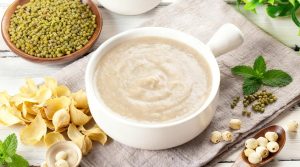
Water Chestnut Spleen-Strengthening Congee
Main Indications: Strengthens the Spleen, stimulates appetite, and resolves food stagnation.
In children, the Spleen is often underdeveloped and easily injured by improper diet. Modern adults likewise frequently experience food stagnation and abdominal bloating due to irregular eating habits.
This formula draws upon the food-resolving properties of water chestnut, combined with ingredients that are sweet and neutral in nature and strengthen the Spleen. Prepared into a smooth, delicate congee using the iTAZZO i-Processor, it helps relieve digestive stagnation while protecting the delicate Spleen and Stomach. With a naturally mild sweetness, it is suitable for both children and the elderly.
Formula Principles & TCM Interpretation
1. Water Chestnut (use cooked):
After cooking, its cooling nature is significantly reduced, while its ability to promote digestion, resolve food stagnation and relieve abdominal bloating remains intact. It also becomes easier to digest.
2. Chinese Yam:
Sweet and neutral, strengthens the Spleen and nourishes the Stomach, protecting the middle burner. Its naturally viscous texture forms a protective layer for the digestive tract. Paired with water chestnut, the combination achieves a balance of one resolving and the other tonifying, working synergistically.
3. Millet:
Sweet, salty, and cooling; harmonizes the Stomach, benefits the Kidney, and clears heat. Naturally easy to digest, millet is a classic Stomach-nourishing grain that enhances the congee’s thickness and satiety.
4. Dried Tangerine Peel (a small amount):
Pungent, bitter, and warm; regulates Qi, strengthens the Spleen, dries dampness, and transforms phlegm. A small amount helps enhance water chestnut’s effect in relieving bloating, prevent the congee from becoming overly cloying, and adds gentle aroma.
Ingredients (1–2 servings)
- Water Chestnut (peeled): 60 gm
- Fresh Chinese Yam: 50 gm
- Millet: 20 gm
- Dried Tangerine Peel: 1 small piece (approx. 1 gm)
- Filtered Water: 400 ml
Preparation (High-Speed Blending into a Gentle, Harmonizing Congee)
- Rinse the millet and dried tangerine peel. Peel and cut the Chinese yam into small pieces. Peel and cut the water chestnut into chunks.
- Steam the Chinese yam pieces in a small pot until fully cooked.
- Transfer all ingredients together with 400 ml of filtered water into the iTAZZO i-Processor.
- Secure the lid. Blend at Speed 8 for 10 minutes until a smooth, fine, warm congee-like consistency.
Consumption Tips and Precautions
- Best Time: As part of breakfast, or between meals when experiencing abdominal bloating or poor appetite. Consume warm.
- Frequency: For daily wellness, 2–3 times per week. During periods of food stagnation, it may be consumed for 2–3 consecutive days.
- Important Reminders:
- This preparation is gentle, balanced, and mildly warming, making it suitable for individuals with weak Spleen and Stomach function, poor digestion, reduced appetite, as well as children.
- Individuals with constipation may increase intake; those with loose stools may dry-toast the millet before use and slightly increase the proportion of Chinese yam.
- No additional sugar is required, as water chestnut and Chinese yam provide a natural mild sweetness.
《⻢蹄专业解读与⻝疗应⽤》
⼀、性味归经
性味:味⽢,性微寒。
归经:主⼊肺、胃、⼤肠经。
【专业解读】
⻢蹄(荸荠 bí qí)的“⽢”味能滋养肺胃之阴,⽣津⽌渴;其“微寒”之性则能清热化痰、凉⾎解毒。归肺经可清肺热、化痰涎,归胃经能⽣津益胃、消⻝除 胀,归⼤肠经则有润肠通便、凉⾎⽌⾎之功。因其性偏寒凉,质地脆嫩多汁,故有“地下雪梨”之美誉,尤擅清解上中焦之热。
⼆、传统中医理论核⼼
(核⼼机理与“清润之果”的由来)
中医认为,肺为娇脏,喜润恶燥;胃为阳⼟,喜润恶燥。热邪或燥邪易伤肺胃津液,导致⼲咳、⼝渴、便秘等症。
⽢寒⽣津:其味⽢能补,性寒能清,汁液丰沛,能直接补充⼈体津液,清热⽽不伤阴,润燥⽽不滋腻。
化痰消积:微寒之性可化解肺中热痰,其质地富含⽔分与膳⻝纤维,能促进胃肠蠕动,帮助消化积滞。
凉⾎解毒:对于⾎分有热引起的咽喉肿痛、⽬⾚等症,有辅助清热凉⾎之效。
这种 “清、润、通” 相结合的特性,使其成为清热⽣津、润燥通便的佳品。
三、现代营养科学佐证
现代研究发现,⻢蹄(荸荠 bí qí)的传统功效有其物质基础:
- ⾼⽔分与多种糖类:含⽔量达80%以上,并含有葡萄糖、果糖等,能快速补充体液和能量,与传统“⽣津⽌渴”功效吻合。
- 荸荠英(Puerarin):⼀种独特的抗菌成分,对⾦⻩⾊葡萄球菌、⼤肠杆菌等有⼀定抑制作⽤,为其“清热解毒”提供了科学依据。
- 膳⻝纤维:含量丰富,能促进肠道蠕动,预防便秘,有助于清除肠道废物,体现“消积通便”之能。
- 磷元素:含量较⾼,是促进⼈体⽣⻓发育、维持⽣理功能的重要矿物质,有益于⻣骼、⽛⻮及神经健康。
- 低热量:富含⽔分和纤维,热量较低,是健康饮⻝的良好选择。
注意:荸荠英等活性成分在加热后易被破坏,故⽤于清热⽣津时,⽣⻝或短暂加热效果更佳。
四、核⼼功效总结
- 清热⽣津,润肺利咽:适⽤于热病伤津或肺胃有热引起的⼝渴、咽喉⼲痛、
- ⼲咳少痰。
- 化痰消积,润肠通便:针对痰热咳嗽、⻝积腹胀及肠燥便秘。
- 凉⾎解毒,辅助降压:对⾎热引起的症状有辅助调理作⽤,其富含的钾和膳⻝纤维对维持⾎压稳定有积极意义。
五、⽣熟⻢蹄的鉴别应⽤
⻢蹄⽣⻝与熟⻝,其性味功效侧重点有所不同:
类型 | ⽣⻢蹄 | 熟⻢蹄 |
药性偏向 | 性偏寒凉 | 性转平和 |
适⽤⼈群 | 肺胃热盛、津伤⼝渴者咽喉肿痛、⽬⾚尿⻩ 热痰咳嗽、⼝渴喜冷饮 | 脾胃偏弱、不耐⽣冷者消化不良、腹胀⻝积 作为⽇常甜品、性质更为温和 |
重要提醒:⽣⻢蹄可能寄⽣姜⽚⾍,务必彻底洗净、去⽪,或选择熟制。免疫⼒低下者及⼉童建议熟⻝。
六、⻝疗古⽅新制
⻢蹄质地脆嫩,汁液丰富,⾮常适合⽤智能养生机机打成细腻浆汁,既能保留全部营养,⼜使其寒凉之性更易被脾胃接受。
⻢蹄健脾羹
主治:健脾开胃,消⻝化积⼩⼉脾常不⾜,易为饮⻝所伤;现代成⼈亦多因饮⻝不节导致⻝积腹胀。此⽅取⻢蹄消积之⼒,搭配性味⽢平、健脾之品,经ITAZZO智能养生机做成细腻羹汤,既能缓解积滞,⼜保护娇嫩脾胃,味道清甜,⽼少咸宜。
配⽅原理与中医解析
- ⻢蹄(熟⽤):煮熟后寒性⼤减,消⻝化积、除胀之功仍在,且更易消化。
- ⼭药:⽢平,健脾养胃,固护中焦。其黏稠质地能形成保护膜,与⻢蹄搭配,⼀消⼀补,相辅相成。
- ⼩⽶:⽢咸凉,和陈胃、益肾、除热。其本身易于消化,是养胃佳品,能增加羹的稠度和饱腹感。
- 陈⽪(少许):⾟苦温,理⽓健脾,燥湿化痰。少量加⼊可助⻢蹄消胀,并防⽌羹汤过于滋腻,亦有增⾹之效。
材料准备(1-2⼈份)
- ⻢蹄(去⽪):60 gm
- 新鲜⼭药:50 gm
- ⼩⽶:20 gm
- 陈⽪:1⼩瓣(约1 gm)
- 纯净⽔:400 ml
制作步骤(破壁成羹,温润和中)
- ⼩⽶、陈⽪洗净。⼭药去⽪切⼩块。⻢蹄去⽪切块。
- 将⼭药块放⼊⼩锅后蒸熟。
- 将所有材料和加⼊400 ml纯净⽔一同倒⼊iTAZZO智能养生机机中。
- 盖紧盖⼦,设定档速8号,搅打10分钟,打成均匀、细腻、温热的羹状。
饮⽤宜忌与温馨提示
- 最佳饮⽤时机:可作为早餐的⼀部分,或两餐之间感到腹胀、⻝欲不振时温热服⽤。
- 饮⽤频率:⽇常保健每周2-3次,⻝积期间可连续饮⽤2-3天。
核⼼提醒:
- 本品性质平和偏温润,适合脾胃虚弱、消化不良、⻝欲不振者及⼉童。
- 便秘者可多⽤;便溏者可将⼩⽶炒制后再⽤,并适当增加⼭药⽐例。
- ⽆需额外加糖,⻢蹄与⼭药⾃带清甜。