《 Professional Interpretation & Dietary Application of Lotus Root 》
1. Nature,Tasteand Meridian Affiliation
Nature & Taste: Raw lotus root is cold in nature; cooked lotus root is warm in nature; Sweet in taste.
Meridian Entered: Heart, Spleen, Stomach, Liver meridians
Professional Interpretation
Lotus root is a particularly unique medicinal food in Traditional Chinese Medicine (TCM), as its therapeutic nature changes significantly depending on whether it is consumed raw or cooked.
Raw lotus root is cold in nature and sweet in taste. Traditionally, it is used to clear heat, cool the Blood, and disperse Blood stasis, particularly in TCM patterns associated with heat in the upper body. It is therefore traditionally regarded as a cooling food.
When cooked, lotus root is traditionally considered warm in nature. Its white colour is associated with the Lung in TCM, while its dense texture is associated with the Spleen. Cooked lotus root is traditionally used to strengthen the Spleen and Stomach, improve appetite, nourish Blood, and support the Heart, making it a nourishing food in TCM dietary practice.
The naturally hollow structure of lotus root is traditionally associated with promoting the smooth flow of Qi and Blood, while its nodes have an astringent quality and are traditionally used to help control bleeding. This gives lotus root a distinctive combination of traditional functions—it can both “unblock” and “nourish,” as well as “clear” and “tonify.”
Its white colour corresponds to the Lung and the Metal element associated with autumn in TCM, while its substantial nature is traditionally associated with the Spleen and Stomach and their role in digestion and transformation. Its hollow structure is also traditionally linked with promoting the flow of Qi and Blood and unblocking the channels. This combination of clearing and nourishing, unblocking and tonifying makes lotus root a versatile food in TCM dietary therapy.
In the classic Compendium of Materia Medica (Ben Cao Gang Mu), lotus root is described as “Ling Gen” (“spiritual root”) and traditionally associated with relieving heat and thirst, dispersing Blood stasis, and supporting tissue recovery. Lotus root has also long been valued in traditional practice as a nourishing food during recovery from illness and for postpartum dietary nourishment.
2. Core Conceptsin Traditional Chinese Medicine(TCM)
In Traditional Chinese Medicine (TCM), the core value of lotus root lies in its ability to clear heat and cool the Blood, strengthen the Spleen and improve appetite, and nourish Blood and support tissue recovery.
Clearing Heat and Cooling the Blood (Properties of Fresh Lotus Root):
Raw lotus root is cold in nature and sweet with a cooling quality. In TCM, it’s traditionally associated with the Heart, Liver, and Stomach meridians. It is traditionally used to clear heat, cool the Blood, and help control bleeding, particularly in TCM patterns associated with Blood heat, such as vomiting blood, nosebleeds, coughing up blood, and excessive uterine bleeding.
For people living in Malaysia’s year-round hot climate who are prone to internal heat, dry mouth and throat, restlessness, and insomnia, fresh lotus root juice is a particularly gentle food for relieving summer heat and does not impair Yang Qi in the way strongly cooling medicinal substances do.
Strengthening the Spleen and Improving Appetite (Properties of Cooked Lotus Root):
After cooking, lotus root is traditionally considered to change from cold to warm in nature. Its traditional Blood-stasis-dispersing function is considered milder, while its nourishing effects on the Spleen and Stomach become more prominent.
Cooked lotus root is traditionally used to strengthen the Spleen and improve appetite. Within TCM dietary theory, it may be incorporated into diets for digestive discomfort such as poor appetite, abdominal fullness, and irregular bowel movements.
It is traditionally regarded as nourishing without being overly cloying and supportive without being excessively cooling, making it a gentle food for children, older adults, and individuals recovering from prolonged illness or weakness.
Nourishing Blood and Supporting Tissue Recovery:
In TCM, it is said that “the Spleen governs the muscles” and “the Heart governs the Blood and vessels.” Lotus root is traditionally considered to strengthen the Spleen and support Blood nourishment.
From a modern nutritional perspective, lotus root provides iron, vitamin C, dietary fibre, and other nutrients that contribute to normal nutritional status. Vitamin C also helps support the absorption of plant-based iron, providing a modern nutritional perspective on the traditional concept of nourishing Blood.
In TCM dietary practice, cooked lotus root is traditionally valued during recovery from illness, postpartum nourishment, and states of Qi and Blood deficiency.
“The Spleen is the source of phlegm, the Lungs are the container of phlegm, and the Heart is fundamental to Blood formation”. Within TCM theory, hot and humid environments may be associated with patterns of both heat and dampness.
Raw lotus root is traditionally used to clear heat and cool the Blood, while cooked lotus root is traditionally used to strengthen the Spleen and support digestion, corresponding to the TCM principle of “Cultivating Earth to Generate Metal.” This combination of clearing and nourishing, unblocking and tonifying reflects the versatility of lotus root in TCM dietary therapy.
3. Supporting Evidence from Modern Nutritional Science
Modern nutritional analysis shows that the traditional benefits of lotus root are closely associated with its unique nutritional composition:
Mucilage
Lotus root is rich in mucilage, a carbohydrate-based substance that may help protect the digestive tract lining and reduce irritation caused by coarse foods. This closely corresponds with the TCM view that cooked lotus root strengthens the Spleen, improves appetite, and protects Stomach Qi. At the same time, its abundant dietary fiber, particularly insoluble fiber, helps promote intestinal movement and supports the elimination of waste from the body. Lotus root also contains tannins with astringent properties that may help reduce diarrhea, giving it a traditional role in supporting balanced bowel function.
Iron, Calcium, and Other Minerals
Lotus root is relatively rich in iron compared with other root vegetables, and its vitamin C content may help enhance the absorption of plant-based iron. Together, these nutrients provide a nutritional basis for the traditional concept of “nourishing the Blood.” Calcium also contributes to healthy bones, normal nerve function, and muscle function, and may provide supportive nutritional benefits for overall relaxation and well-being.
Vitamin C and Polyphenolic Compounds
Lotus root contains vitamin C (approximately 20 mg per 100 g) as well as polyphenolic compounds such as gallic acid and catechin. These compounds have antioxidant and anti-inflammatory properties and may support normal immune function, including the activity of macrophages and natural killer cells. This provides a modern nutritional perspective on the traditional use of raw lotus root for “clearing Heat and cooling the Blood.”
Asparagine and Vitamin B12 Precursors
Lotus root contains a naturally occurring compound called asparagine, which is involved in normal protein and energy metabolism. In addition, lotus root is among the plant-based foods reported to contain vitamin B12 precursor compounds. These nutrients provide a nutritional perspective on the traditional concept of “nourishing the Heart and Blood” and supporting overall vitality.
Tannins
The tannins found in lotus root have astringent and antioxidant properties and have traditionally been associated with bleeding control. This provides a possible pharmacological perspective on the TCM use of lotus root nodes for stopping bleeding and dispersing Blood stasis.
【Additional Key Point】A “Clearing and Nourishing” Food for Hot and Humid Climates
Lotus root is unique because its traditional properties change according to preparation:
- Raw lotus root is used to clear heat and cool the Blood
- Cooked lotus root is used to strengthen the Spleen (digestion) and provide gentle nourishment.
In a hot and humid climate such as Malaysia’s, the body may be affected by both Heat and Dampness, while also requiring support for Qi and Yin. Lotus root offers a traditional approach to this balance: it helps clear summer Heat when consumed raw, while cooked lotus root supports the Spleen and Stomach and provides gentle nourishment without being overly rich or contributing to Dampness. This makes it a versatile root vegetable for daily wellness and dietary support during recovery.
4. Summary of CoreEffects
Clearing Heat and Cooling the Blood (Raw/Fresh Lotus Root):
Traditionally used for TCM patterns associated with Blood heat, including restlessness and thirst, nosebleeds, coughing up blood, scanty dark urine, and heat-related skin eruptions.
Strengthening the Spleen and Improving Appetite (Cooked Lotus Root):
Traditionally used for Spleen and Stomach weakness associated with poor appetite, abdominal fullness, irregular bowel movements, fatigue and low energy, and childhood digestive weakness.
Nourishing Blood and Supporting Tissue Recovery:
Traditionally valued in dietary practice for individuals experiencing a pale or sallow complexion, dry skin, postpartum weakness, or weakness following prolonged illness.
Dispersing Blood Stasis and Supporting Bleeding Control (Especially Lotus Root Nodes):
Lotus root nodes have traditionally been used in TCM for various bleeding patterns, including nosebleeds, vomiting blood, excessive uterine bleeding, and blood in the urine.
5. Traditional Dietary Recipe with Modern Adaptation
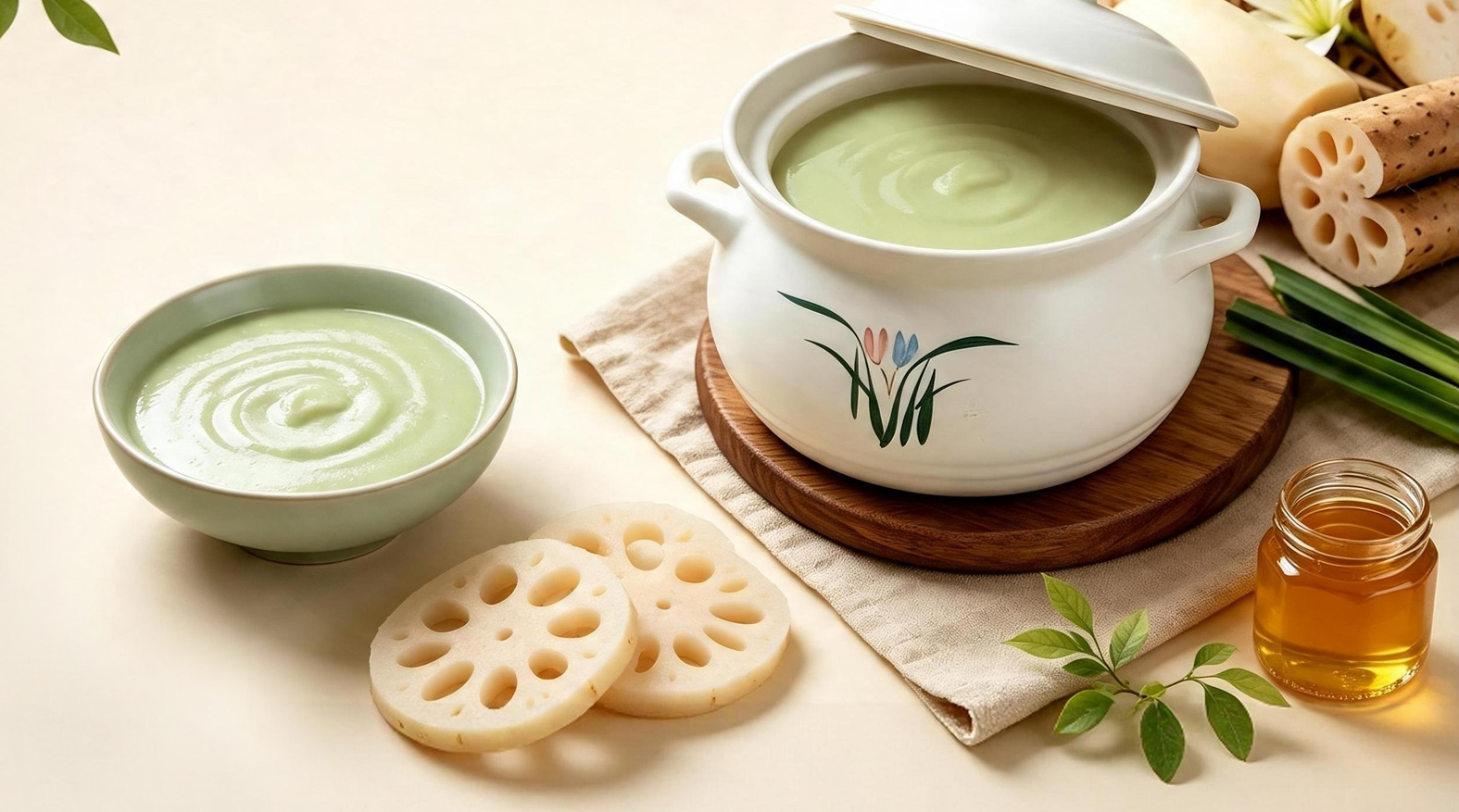
Lotus Root & Pandan Antioxidant Drink
Indications: Antioxidant and anti-inflammatory support, helps combat free radicals, cools the Blood, and supports detoxification.
Best Suited For:
Individuals who
- Frequently stay up late
- Have a dull complexion or are prone to breakouts
- Experience persistent fatigue
- Have a tendency toward chronic inflammation
- Spend long hours in air-conditioned environments
- Frequently exposed to strong outdoor UV radiation
Ingredients (1–2 servings)
1. Fresh Lotus Root – 60 gm
- Nature & Meridian: Sweet, Cold; enters the Heart, Liver, Stomach meridians
- Benefits: Clears heat and cools the Blood, while retaining more vitamin C, SOD and polyphenolic antioxidant compounds.
2. Pandan Leaves – 3–4small pcs
- Nature & Meridian: Sweet, Cooling; enters the Spleen and Stomach meridians
- Benefits: Clears heat and support detoxification, helps resolve dampness, and harmonize the digestive system, and is rich in chlorophyll and aromatic volatile oils.
3. Honey – 1 tablespoon
- Nature & Meridian: Sweet, Neutral; enters the Lung, Spleen, Large Intestine meridians
- Benefits: Adds flavour and helps moisten dryness. Add after the drink has cooled slightly to help preserve its active components.
4. Hot Water – 500 ml
Preparation
- Peel and cut the lotus root into pieces. Wash the pandan leaves thoroughly and cut them into smaller sections.
- Place the lotus root, pandan leaves, and hot water into the iTAZZO i-Processor, blend at Speed 8 for 10 minutes until smooth.
- Add the honey and mix well before serving.
Consumption Tips and Precautions
- Best Time: Consume in the morning on an empty stomach or in the early afternoon (1–3 PM), corresponding to the peak activity of the Small Intestine meridian in TCM, to help clear accumulated internal heat from overnight or throughout the day.
- Frequency: For daily antioxidant support, consume 2–3 times per week. After staying up late or prolonged sun exposure, it may be consumed for 2–3 consecutive days.
《 莲藕的专业解读与食疗应用 》
一、性味归经
性味: 生者性寒,熟者性温;味甘
归经: 心、脾、胃、肝经
【专业解读】
莲藕是“药食同源”中极为特殊的一味——鲜品与熟品药性截然相反。生藕性寒,甘凉入血,善清上焦心、肺之火,凉血散瘀,是天然的“清热甘露”;熟藕性温,由寒转温,其色白入肺、质厚入脾,能健脾开胃、益血补心,成为“补益佳品”。
莲藕中空有孔,善于通调气机;其节收缩固涩,又有收敛止血之功。一根莲藕,兼具“通”与“补”、“清”与“养”的双重特性,在中药材中颇为罕见。尤其值得注意的是,其色白入肺,得秋金之气,能清肺润燥;其质重性沉,入脾胃以助运化;其孔窍通达,又具通络行血之能。这种“一物多能”的特性,使其在调理复杂病机时独具优势。正如《本草纲目》称其为“灵根”,认为其“主治热渴,散瘀血,生肌”。民间亦有将莲藕作为病后康复、产后调养的重要食材之传统。
二、传统中医理论核心
在中医养生理论中,莲藕的核心价值在于 “清热凉血” 、 “健脾开胃” 与 “益血生肌” 。
清热凉血(鲜品特性):
生藕性寒,味甘凉,入心、肝、胃经。它能清解胸中烦热,凉血止血,尤善治疗因血热所致的吐血、衄血、咳血以及妇女崩漏下血。对于马来西亚常年暑热、易生内火、口干舌燥、心烦失眠的人群,鲜藕榨汁是极为温和的解暑圣品,不似寒凉药物那般伤及阳气。
健脾开胃(熟品特性):
莲藕经过加热,其性由寒转温,其散瘀之功变弱,而补益脾胃之力显现。熟藕能醒脾开胃,对于马来西亚湿热气候导致的食欲不振、脘腹痞闷、大便溏泄或干结不调,有极佳的调理作用。它补而不滞,清而不寒,尤其适合小儿、老人及久病体虚者。
益血生肌:
中医认为“脾主肌肉”、“心主血脉”。莲藕能健脾以养肌肉,补心以生血液。其富含的铁质和维生素 B12 前体物质,在中医看来便是“养血”的物质基础。久食熟藕,能令肌肤润泽、面色红润,对于病后恢复、产后调养、气血不足之证,有“血肉有情之品”难以比拟的平和补益之效。
“脾为生痰之源,肺为贮痰之器,而心为生血之本”: 在马来西亚湿热的背景下,人体多湿多热。莲藕既可通过生食清热凉血、化解血分郁热;又可通过熟食健脾祛湿、培土生金,从源头上杜绝痰湿的生成。这种“清上温下、通补兼施”的思路,完美契合了当地“外热内寒、上热下寒”的常见体质,是调理复杂病机的“和事佬”。
三、 现代营养科学佐证
现代营养学分析表明,莲藕的传统功效与其独特的营养成分密不可分:
黏液蛋白:
莲藕富含一种由糖类组成的黏液蛋白,能保护消化道黏膜,减少粗糙食物对胃壁的刺激,这与中医“熟藕健脾开胃、保护胃气”完全吻合。同时,其丰富的膳食纤维(尤其是不可溶性纤维)能促进肠道蠕动,帮助排🎧体内毒素和湿热之邪。莲藕同时含有鞣质,具有收敛止泻作用,故对腹泻亦有双向调节之妙。
铁、钙等微量元素:
莲藕是根茎类蔬菜中含铁量较高的品种,且极易被人体吸收,配合其丰富的维生素 C(促进铁吸收),共同构成了“益血”的物质基础。钙质则有助于强健骨骼、稳定神经,对缓解马来西亚湿热天气下常见的烦躁不安、失眠多梦有辅助作用。
维生素 C 与多酚类物质:
莲藕富含维生素 C(每 100 克约含 20 毫克)及多酚类物质(没食子酸、儿茶素等),具有显著的抗氧化、抗炎及免疫调节作用,能激活巨噬细胞和自然杀伤细胞活性。 这正是生藕“清热凉血”功效的现代科学印证。
天门冬素与维生素 B12 前体:
莲藕中含有一种叫“天门冬素”的天然物质,能帮助蛋白质分解,促进新陈代谢,增强免疫力。此外,莲藕是少数含有维生素 B12 前体物质的植物性食材,对维持神经系统健康、预防恶性贫血有重要作用,为“补心益血”提供了现代科学视角。
丹宁酸(鞣质):
莲藕中的丹宁酸有良好的收敛、止血、抗炎作用。这正是中医用莲藕节止血散瘀的药理学基础。它能收缩血管,缩短凝血时间,对内出血和外伤出血均有疗效。
【补充关键点】湿热地区的“清补双修”佳品: 莲藕既能清热(生用),又能补脾(熟用),是一味不可多得的“清补”之材。对于马来西亚这种全年夏季、湿热交蒸的环境,人体气阴两伤,既需要清热解暑,又需要补气养阴。莲藕完美地解决了这一矛盾——它既能清除暑热之邪,又能培补被湿气所伤的脾胃之气,且不滋腻、不助湿,是当地人日常保健、病后调理的首选根茎。
四、核心功效总结
- 清热凉血(生/鲜品): 针对心烦口渴、鼻衄咳血、小便短赤、血热发斑等血分有热之证。
- 健脾开胃(熟品): 针对食欲不振、脘腹胀满、大便不调、神疲乏力、小儿疳积等脾胃虚弱证。
- 益血生肌: 针对面色萎黄或苍白、爪甲不荣、产后血虚、久病体虚、皮肤干燥。
- 散瘀止血(尤以藕节为要): 针对吐血、衄血、崩漏、尿血等各种出血证。
五、食疗古方新制
莲藕~香兰叶抗氧化饮
主治: 抗氧化,抗炎,清除自由基,凉血解毒
最佳体征: 长期熬夜、皮肤暗沉易长痘、疲劳感强、身体有慢性炎症倾向者;长期处于空调房或户外紫外线强烈环境者。
食材(1-2 人份):
1. 新鲜莲藕:60 gm
- 性味归经:甘,寒;归心、肝、胃经。
- 功效:清热凉血,保留更多维生素 C、SOD 和多酚类抗氧化成分。
2. 香兰叶(斑斓叶):3-4 小片
- 性味归经:甘,凉;归脾、胃经。
- 功效:清热解毒,化湿和中,富含叶绿素与芳香挥发油。
3. 蜂蜜:1 汤匙
- 性味归经:甘,平;归肺、脾、大肠经。
- 功效:调味润燥,待稍凉后加入以保留活性成分。
4. 热水:500ml
做法:
- 莲藕去皮切块,香兰叶洗净剪碎。
- 将莲藕、香兰叶喝热水放入iTAZZO 智能养生机中,选择档速8号,搅打10分钟至细腻。
- 加入蜂蜜调匀即可。
饮用宜忌与温馨提示:
- – 黄金饮用时间: 晨起空腹或午后(未时,下午 1-3 点,小肠经当令),利于清解一夜或半日积聚之热毒。
- – 饮用频率: 日常抗氧化保健每周 2-3 次;熬夜后或暴晒后可连续饮用 2-3 天。