《 Professional Interpretation & Dietary Application of Cherry Tomatoes 》
1. Nature,Taste, and Meridians
Nature & Taste: Sweet, Sour, Slightly Cooling
Meridians Entered: Liver, Lung, Stomach
Professional Interpretation
The sweetness of cherry tomatoes has the functions of tonifying, harmonizing, and moderating. In cherry tomatoes, this sweetness is reflected in their rich juice content, which helps nourish Stomach Yin, generate body fluids, and relieve thirst. Their naturally pleasant sweetness also gives them a harmonizing effect, allowing their cooling properties to clear heat gently without excessively weakening the body’s vital energy.
The sourness of cherry tomatoes is the core of its therapeutic function. In TCM, sourness can astringe, stabilize, and generate body fluids. This is mainly expressed in its ability to soothe and restrain Liver Qi, promote fluid production, and support digestion.
- When Liver Qi is properly regulated, excessive Liver Yang is less likely to rise
- When body fluids are replenished, symptoms such as dry mouth and throat can be relieved
- When digestive function is supported, food stagnation may improve
Compared to stronger sour medicinal substances, the sourness of cherry tomatoes is mild and balanced, making them more suitable for daily dietary therapy.
Its slightly cooling nature complements its sourness, forming the basis of their ability to clear heat, cool the Blood, and calm Liver Fire. Compared to regular tomatoes, cherry tomatoes are less cooling in nature and slightly sweeter, making them more suitable for individuals with weaker digestion (Spleen and Stomach Qi deficiency).
By entering the Liver, Lung, and Stomach meridians, cherry tomatoes are particularly effective in clearing Liver heat and moistening dryness in the Lung and Stomach. They are regarded as an excellent dual-purpose medicinal food for both nourishment and therapeutic support for individuals with heat-dominant constitutions, Liver Yang rising, or insufficient body fluids (Yin deficiency).
2. CoreConceptsin Traditional Chinese Medicine (TCM)
In Traditional Chinese Medicine (TCM), the core value of cherry tomatoes lies in their ability to generate body fluids and relieve thirst as well as cool the Blood and calm the Liver.
Sweet and Sour Together Generate Yin and Relieve Dryness:
In TCM theory, the combination of sour and sweet can help generate Yin and body fluids—an important therapeutic principle known as “sweet and sour together generate Yin.”
Cherry tomatoes possess both sweet and sour qualities, they are effective in replenishing body fluids and moistening internal dryness. When external febrile illnesses consume fluids, or when internal heat damages Yin, symptoms such as dry mouth and throat, throat discomfort, poor appetite, and Stomach yin deficiency may arise. In such conditions, cherry tomatoes can exert their function of “generating fluids through sweet and sour”, helping restore essential fluids within the body.
By entering the Lung and Stomach meridians, cherry tomatoes can:
- Moisten Lung dryness to relieve dry cough
- Nourish Stomach Yin to improve appetite
- Alleviate dryness-related discomfort
This reflects classical TCM treatment principles such as “moisten dryness when dryness is present” and “use sweetness to nourish and support deficiency.”
Cools the Blood and Calms the Liver:
In TCM, the Liver belongs to the Wood element. It prefers smooth and free-flowing Qi movement, stores in the Blood, and is Yin in substance but Yang in function. When emotional stress accumulates or when Kidney Yin is insufficient, it may lead to Liver Fire flaring upward or Liver Yang rising, resulting in symptoms such as:
- Dizziness and vertigo
- Facial flushing and red eyes
- Irritability and emotional agitation
- Restless sleep or insomnia
Cherry tomatoes enter the Liver meridian. Their slightly cooling nature helps clear Liver heat, while their mild sourness helps astringe and restrain excessive rising Yang energy. This combination of cooling and astringing properties allows them to:
- Clear excessive Liver Fire
- Subdue rising Liver Yang energy
- Calm internal heat and agitation
- Support balance within the Liver system
Their cooling effect on the Blood may provide supportive dietary regulation for heat-related conditions such as nosebleeds, bleeding gums, or skin redness caused by Blood heat.
The Liver Opens into the Eyes
According to TCM, the Liver is closely connected to eye health because Liver blood nourishes the eyes and supports clear vision.
- Excessive Liver Fire may cause red, swollen, painful eyes with discharge
- Liver Yin deficiency may lead to dry, tired eyes and blurred vision or visual fatigue
Cherry tomatoes help to clear Liver heat and nourish Liver Yin, making them useful for relieving eye redness, irritation, and dryness.
In modern lifestyles, prolonged screen use often leads to depletion of Liver Blood and rising internal heat. Regular, moderate consumption of cherry tomatoes may help support eye comfort and Liver health.
Supporting Digestion: “The Stomach Receives, the Spleen Transforms”
In TCM, the Stomach governs the receiving and digestion of food, while the Spleen governs transformation and transportation of nutrients.
- The sourness of cherry tomatoes helps stimulate digestive secretions, enhancing the Stomach’s digestive function
- The sweetness of cherry tomatoes nourishes the Spleen, supporting the production and transformation of Qi and Blood
For conditions such as food stagnation, bloating, acid regurgitation, and poor appetite, cherry tomatoes can help promote digestion and improve appetite, making them a useful dietary aid for digestive wellness. As they also enter the Lung meridian, cherry tomatoes may help clear Lung heat, moisten dryness, and relieve dry cough or throat discomfort through their fluid-generating properties.
3. Supporting Evidence from Modern Nutritional Science
Modern nutritional research shows that the traditional health benefits of cherry tomatoes are closely linked to their unique nutritional composition.
Lycopene – A Powerful Antioxidant for Cardiovascular Protection:
Cherry tomatoes are rich in lycopene, a potent carotenoid antioxidant with an antioxidant capacity more than 10 times than that of vitamin E. Lycopene helps neutralize free radicals, protecting cell membranes and DNA from oxidative damage, thereby slowing the aging process.
Modern studies have confirmed that lycopene plays a role in cardiovascular protection and the prevention of atherosclerosis. It helps reduce the oxidation of low-density lipoprotein (LDL) and minimizes damage to vascular endothelial cells.
These findings align closely with the TCM concept of “cooling and invigorating the Blood.”
Additionally, lycopene tends to accumulate in prostate tissue, where it helps reduce oxidative stress and may lower the risk of prostate-related conditions. This provides a modern scientific perspective supporting the TCM idea of influencing the Liver meridian and lower body (Lower Jiao).
Note: Lycopene is fat-soluble, and its absorption can increase by 2–3 times when consumed with healthy fats after cooking.
Organic Acids – Supporting Digestion:
Cherry tomatoes contain various organic acids, including citric acid and malic acid, which help stimulate gastric secretion and enhance digestive enzyme activity. This supports the breakdown of proteins and fats.
These properties provide a direct nutritional basis for the TCM function of “strengthening the Stomach and aiding digestion.” Their natural sourness also stimulates appetite, making them particularly suitable for individuals with poor appetite or indigestion.
Vitamin C and Vitamin A – Strengthens Immune System and Eye Health:
Cherry tomatoes are a good source of vitamin C, which helps:
- Strengthen the immune system
- Promote collagen synthesis
- Maintain the integrity of blood vessels
- Provide antioxidant protection
Vitamin C also works synergistically with lycopene to enhance antioxidant effects.
They are additionally rich in vitamin A precursors, particularly beta-carotene, which is essential for maintaining eye health, protecting the retina, and reducing the risk of night blindness, dry eyes and visual fatigue.
This supports the TCM concept that “the Liver opens into the eyes,” linking nutrition with visual health.
Potassium – Supporting Blood Pressure Balance:
Cherry tomatoes are relatively high in potassium, an essential mineral involved in maintaining fluid balance and cellular osmotic regulation. Potassium helps promote the excretion of excess sodium from the body. Since excessive sodium intake contributes to fluid retention and elevated blood pressure, cherry tomatoes may help support healthy blood pressure balance through a “preserve potassium, reduce sodium” mechanism.
This provides a modern scientific explanation for the TCM function of “calming the Liver and subduing rising Yang”, particularly in relation to hypertension and vascular tension.
Dietary Fiber and Flavonoids – Gut Health and Anti-Inflammatory Support:
The dietary fibre in cherry tomatoes helps promote bowel movement, regulate gut microbiota, and support digestive health.
They also contain flavonoid compounds such as quercetin and kaempferol, which have anti-inflammatory, anti-allergic, and vascular-protective effects. These compounds help reduce chronic low-grade inflammation within the body.
This corresponds to the TCM concept of “clearing heat and removing toxins.”
【Additional Key Point】Enhanced Benefits Through Cooking and Food Pairing
Since lycopene is fat-soluble, its absorption can be significantly improved when consumed with healthy fats.
For better nutritional benefits, cherry tomatoes can be:
- Lightly cooked with plant-based oils such as olive oil
- Paired with nuts and seeds (e.g., walnuts, pumpkin seeds)
This reflects the TCM principle of “food and medicine share the same origin, and proper pairing enhances efficacy.”
4. Summary of CoreEffects
Generates Body Fluids and Relieves Thirst:
Suitable for conditions caused by fluid depletion due to heat or Stomach Yin deficiency, such as dry mouth, dry throat, thirst, and poor appetite.
Strengthens Digestion and Improves Appetite:
Helps with food stagnation and weak digestive function (Spleen and Stomach deficiency), presenting as bloating, acid reflux, belching, indigestion, and reduced appetite.
Cools the Blood and Calms the Liver:
Beneficial for symptoms related to Liver Fire or Liver Yang rising, such as dizziness, vertigo, facial flushing, red eyes, irritability, and restless sleep.
Clears Heat and Detoxifies:
Supports conditions associated with internal heat accumulation, including mouth ulcers, acne, sore throat, and dark or concentrated urine.
Invigorates Blood Circulation and Reduces Stagnation:
Supports healthy circulation in cases of poor blood circulation or Blood stasis, such as dull complexion, microcirculatory issues, and a tendency toward atherosclerosis.
Supports Kidney Essence and Reproductive Health:
Through the combined effects of lycopene and zinc, cherry tomatoes may help support prostate health and lower body (Lower Jiao) function, aligning with the TCM concept of “nourishing the Kidney and securing essence.”
5. Traditional Dietary Recipe with Modern Adaptation
Indications: 【Prostate Health Support】
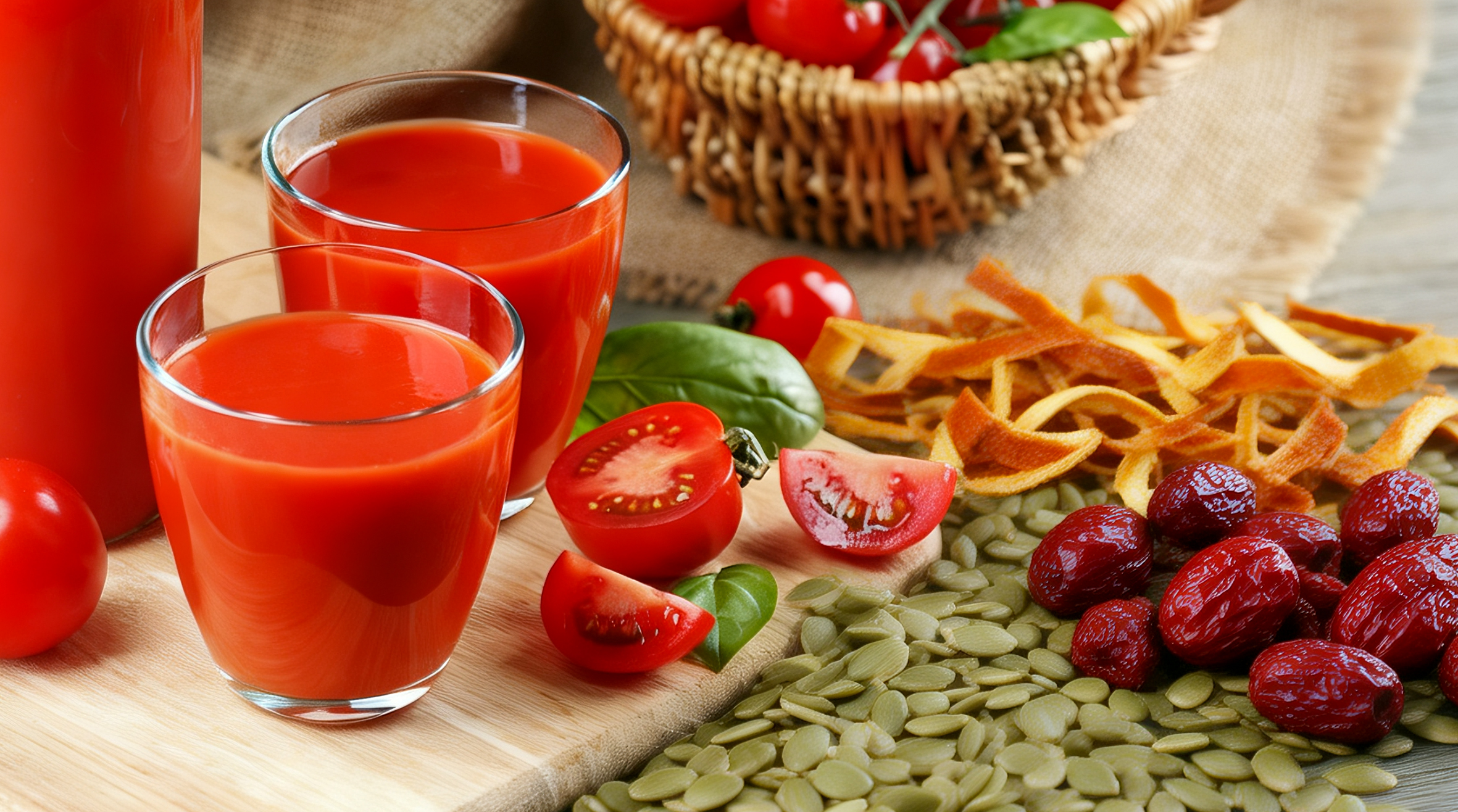
Cherry Tomato – Kidney & Prostate Nourishing Drink
This formula is designed for conditions related to “Kidney Qi instability and damp-heat accumulation in the lower body (Lower Jiao)”. It works by utilizing:
- Cherry tomatoes, which release a high amount of lycopene when heated, helping to reduce oxidative stress
- Pumpkin seeds, which help tonify the Kidney and support reproductive essence
- Aged tangerine peel (Chen Pi), which helps regulate Qi and resolve dampness
Together, these ingredients provide gentle and targeted support for the lower body system, particularly for prostate health.
Core Effects: Tonifies the Kidney, secures essence, clears heat and dampness, and supports prostate health.
Best Suited For: Individuals experiencing frequent nighttime urination, urinary urgency or frequency, and a sensation of heaviness or discomfort in the perineal area.
Ingredients (1–2 servings)
Cherry Tomatoes – 12 pcs
- Nature & Meridian: Sweet, sour, slightly cooling; enters Liver, Lung, Stomach meridians
- Benefits: Cools the Blood and calms the Liver. When heated, it releases lycopene, enhancing its antioxidant and protective effects.
Pumpkin Seeds – 30 gm
- Nature & Meridian: Sweet, neutral; enters Spleen, Stomach, Large Intestine meridians
- Benefits: Tonifies Kidney Qi and helps secure essence. Rich in zinc, an essential component for prostate health.
Aged Tangerine Peel (Chen Pi) – 1 segment (about 3 gm)
- Nature & Meridian: Bitter, pungent, warm; enters Spleen and Lung meridians
- Benefits: Regulates Qi, transforms dampness, balances the slight cooling nature of cherry tomatoes, and enhances aroma and digestibility.
Red Dates (Jujube) – 3 pcs(pitted)
- Nature & Meridian: Sweet, Warm; enters Spleen and Stomach meridians
- Benefits: Tonifies Qi, nourishes Blood, and calms the mind.
Filtered Water –300 ml
Preparation
- Wash the cherry tomatoes and cut them in half. Remove the pits from the red dates. Rinse the aged tangerine peel.
- Place all ingredients into the iTAZZO i-Processor, blend at Speed 8 for 5 minutes.
- Consume while warm to minimize nutrient oxidation and maximize absorption.
Consumption Tips and Precautions
- Best Time: Evening (5–7 PM), corresponding to the Kidney meridian peak time in TCM, making the formula more targeted for lower body support.
- Frequency: As a supportive dietary therapy, consume once daily or 3–5 times per week.
- Important Reminders:
- Individuals with acute urinary tract infections accompanied by high fever or severe pain should seek medical treatment promptly.
- This formula is intended as supportive dietary therapy and should not replace prescribed medical treatment.
6. Contraindications and Precautions
Contraindicated Groups
Pregnant women:
Moderate consumption of cherry tomatoes as part of a regular diet is generally acceptable. However, when used in therapeutic dietary formulas, caution is advised—especially formulations containing black fungus, which has a stronger Blood-invigorating effect. It is recommended to consult a qualified practitioner before use.
Recommended Intake
Daily intake:Approximately 8–15 cherry tomatoes per day, either as part of a regular diet or incorporated into dietary therapy.
Frequency and Best Timing
Frequency: As a supportive dietary therapy, it is recommended once daily or 3–5 times per week.
Best time: With breakfast, when the Stomach meridian is most active, allowing foroptimaldigestion and nutrient absorption.
Important Reminders
All the above dietary formulas are intended for supportive health maintenance only and should not replace medical treatment or prescribed medications.
Please consider your individual body constitution before use, and consult a TCM practitioner if necessary.
If symptoms persist or worsen, seek medical attention promptly.
《 小番茄的专业解读与食疗应用 》
1. 性味归经
性味:甘、酸,微寒归经:肝、肺、胃经
【专业解读】
其“甘”味能补、能和、能缓。小番茄之甘,主要体现在其汁液丰富,能滋养胃阴、生津止渴,且口感甜润,具有调和之性,使其清热之功不至于峻猛伤正。
其“酸”味是其核心功效的关键。酸能收、能涩、能生津。主要体现在收敛肝气、生津止渴、促进消化。肝气得收,则肝阳不致过亢;津液得生,则口干舌燥可解;胃酸得助,则食积停滞能消。小番茄的酸味柔和,不似其他酸味药那般峻烈,更适宜日常调养。
其性“微寒”,是其“酸”味之外的补充,共同构成其清热凉血、平肝降火的功效基础。与普通番茄相比,小番茄的寒性稍缓,甘味更显,因此对于脾胃功能偏弱的人群更为友好。其入肝、肺、胃三经,尤善清肝经之热、润肺胃之燥,对于体质偏热、肝阳偏亢、阴津不足之人,是药食两用的佳品。
2. 传统中医理论核心
在中医理论中,小番茄的核心价值在于 “生津止渴” 与 “凉血平肝”。
酸甘化阴,生津润燥:
酸味与甘味相合,能化生阴津,这是中医理论中的重要配伍法则。小番茄兼具酸、甘二味,能有效滋生津液,滋润脏腑。当外感热病后期、或内热耗伤津液,出现口干舌燥、咽喉干痛、胃阴不足、食欲不振等症,小番茄可发挥其“酸甘化阴”之功,补充人体所需的津液。其入肺、胃二经,既能润肺燥以止干咳,又能养胃阴以开食欲,体现了中医“燥者润之”、“甘以补之”的治疗法则。
凉血平肝,潜降火邪:
肝属木,喜条达而恶抑郁,主藏血而体阴用阳。当情志不遂、郁而化火,或肾水不足、水不涵木,易致肝火上炎或肝阳上亢,出现头晕目眩、面红目赤、烦躁易怒、夜寐不安等症。小番茄入肝经,其性微寒,能清肝经之热;其味酸,能收敛上亢之阳气。这一酸寒相合的特性,既能清泻肝火,又能收敛浮阳,使上亢之肝阳得以平降,郁滞之肝火得以清解。同时,其凉血之功可清解血分之热,对于血热妄行所致的鼻衄、牙龈出血、皮肤红斑亦有辅助调理作用。
肝开窍于目:
肝血上注于目,方能视物清晰。若肝火上炎,则目赤肿痛、目眵增多;若肝阴不足,则目涩昏花、视力减退。小番茄能清肝热、养肝阴,对于肝火引起的目赤肿痛有直接的缓解作用,对于肝阴不足所致的目涩干痒亦有滋养之功。现代人长时间用眼,易致肝血暗耗,虚火上炎,适量食用小番茄,亦有裨益。
胃主受纳,脾主运化:
小番茄的酸味能促进胃液分泌,增强胃的受纳腐熟功能;其甘味能滋养脾胃,补充运化所需的气血。对于饮食不节、食积停滞所致的胃脘胀满、嗳气酸腐、食欲不振,小番茄既能助消化,又能开胃气,是健胃消食的辅助佳品。其入肺经,亦能清解肺热,对于肺燥干咳、咽喉不利,有润肺生津之效。
3. 现代营养科学佐证
现代营养学分析表明,小番茄的传统功效与其独特的营养成分密不可分:
番茄红素——抗氧化、护血管的核心物质:小番茄中富含番茄红素,这是一种强效的类胡萝卜素抗氧化剂,其抗氧化能力是维生素 E 的 10 倍以上。番茄红素能有效清除自由基,保护细胞膜和 DNA免受氧化损伤,延缓衰老。现代药理研究证实,番茄红素具有明确的 保护心血管、预防动脉粥样硬化的作用,能降低低密度脂蛋白胆固醇的氧化,减少血管内皮损伤,这与中医“凉血活血”的理论高度契合。此外,番茄红素在前列腺组织中高度富集,能清除前列腺包膜内的自由基,降低前列腺疾病的风险,这为中医“入肝经”而调理下焦的理论提供了科学佐证。值得注意的是,番茄红素为脂溶性物质,加热后与油脂同食,吸收率可提高 2-3 倍。
丰富的有机酸——开胃消食的物质基础:小番茄中含有柠檬酸、苹果酸等多种有机酸,能促进胃液分泌,增强消化酶的活性,帮助分解蛋白质和脂肪。这对于中医“健胃消食”的功效提供了直接的物质基础。其酸味能刺激味蕾,增进食欲,对于食欲不振、消化不良的人群尤为适宜。
高含量的维生素 C 与维生素 A——增强免疫、护眼明目:小番茄是维生素 C 的良好来源,能增强机体免疫力,促进胶原蛋白合成,维护血管壁的完整性。维生素 C 还具有抗氧化作用,与番茄红素协同增效。维生素 A(以 β-胡萝卜素形式存在)是维持视力健康的关键营养素,能保护视网膜,预防夜盲症和干眼症,这为中医“肝开窍于目”的理论提供了营养学支撑。
钾元素——维持血压稳定的关键:小番茄含钾量较高,有助于维持细胞内外的渗透压平衡,促进体内多余的钠离子排出。高钠摄入是导致水钠潴留、血压升高的重要原因之一。小番茄通过“排钠保钾”的机制,有助于维持血压稳定,这为中医“平肝潜阳”以治高血压的功效提供了科学解释。
膳食纤维与黄酮类化合物——调节肠道、抗炎:小番茄中的膳食纤维能促进肠道蠕动,帮助排便,调节肠道菌群。其所含的黄酮类化合物(如槲皮素、山奈酚)具有抗炎、抗过敏、保护血管内皮的作用,能减轻体内的慢性炎症状态,这与中医“清热解毒”的功效相呼应。
【补充关键点】
加热增效与配伍协同:番茄红素为脂溶性物质,与油脂同食时吸收率可显著提升。因此,将小番茄加热后与适量植物油(如橄榄油)同烹,或搭配坚果、种子类食材(如核桃仁、南瓜子)同食,能显著提升其营养价值的利用率。这与中医“药食同源、配伍增效”的理念不谋而合。
4. 核心功效总结
- 生津止渴:针对热病伤津、胃阴不足所致的口干舌燥、咽喉干痛、食欲不振。
- 健胃消食:针对食积停滞、脾胃运化无力所致的胃脘胀满、嗳气酸腐、不思饮食。
- 凉血平肝:针对肝火上炎、肝阳上亢所致的头晕目眩、面红目赤、烦躁易怒、夜寐不安。
- 清热解毒:针对体内热毒蕴结所致的口疮、痤疮、咽喉肿痛、小便黄赤。
- 活血化瘀:针对血行不畅、瘀血内阻所致的面色晦暗、微循环障碍、动脉粥样硬化倾向。
- 补肾固精:通过番茄红素与锌元素的协同,辅助养护前列腺,改善下焦功能。
5. 食疗古方新制
主治:【前列腺养护】
小番茄~补肾护腺浆
此方针对“肾气不固、湿热下注”型问题。通过小番茄经加热释放的大量番茄红素,清除自由基,配合南瓜籽的补肾固精、陈皮的理气化湿,温和养护下焦。
核心功效:补肾固精,清热利湿,养护前列腺。
最佳体征:夜尿增多、尿频尿急、会阴部坠胀不适者。
食材(1-2 人份):
- 小番茄:12 颗
- 性味归经:甘、酸,微寒;归肝、肺、胃经。
- 功效:凉血平肝,熟化后释放番茄红素。
- 南瓜籽:30 gm
- 性味归经:甘,平;归脾、胃、大肠经。
- 功效:补益肾气,富含锌元素,为前列腺液重要成分。
- 陈皮:1 瓣(约 3 gm)
- 性味归经:苦、辛,温;归脾、肺经。
- 功效:理气化痰,中和小番茄微寒,增加香气。
- 红枣:3 颗(去核)
- 性味归经:甘,温;归脾、胃经。
- 功效:补中益气,养血安神。
- 过滤水:300 ml
做法:
- 小番茄洗净切半,红枣去核,陈皮洗净。
- 全部食材放入 iTAZZO 智能养生机,设定档速 8 号搅拌 5 分钟。
- 趁热饮用,避免氧化损失营养。
饮用宜忌与温馨提示:
- 黄金饮用时间:傍晚(5-7 点),此时走肾经,饮用此方效果更精准。
- 饮用频率:作为辅助食疗,建议每日 1 次或每周 3-5 次。
- 核心提醒:
- 急性尿路感染伴高热、尿痛剧烈者,需先就医治疗。
- 本品为辅助调理,不可替代药物治疗。
6. 使用禁忌与注意事项
禁忌人群
- 孕妇:作为日常食材适量食用无妨,但作为食疗方需谨慎,尤其黑木耳活血作用较强,建议咨询医师。
用量
- 每日建议用量:小番茄约 8-15 颗,作为日常食用或食疗配伍。
饮用频率与黄金时间
- 饮用频率:作为辅助食疗,建议每日 1 次或每周 3-5 次。
黄金时间:早餐随餐:借胃经当令,吸收效果最佳。
重要提示:
以上食疗方均为辅助调理用途,不可替代药物治疗。使用前请结合自身体质,必要时咨询中医师。如症状持续或加重,请及时就医。