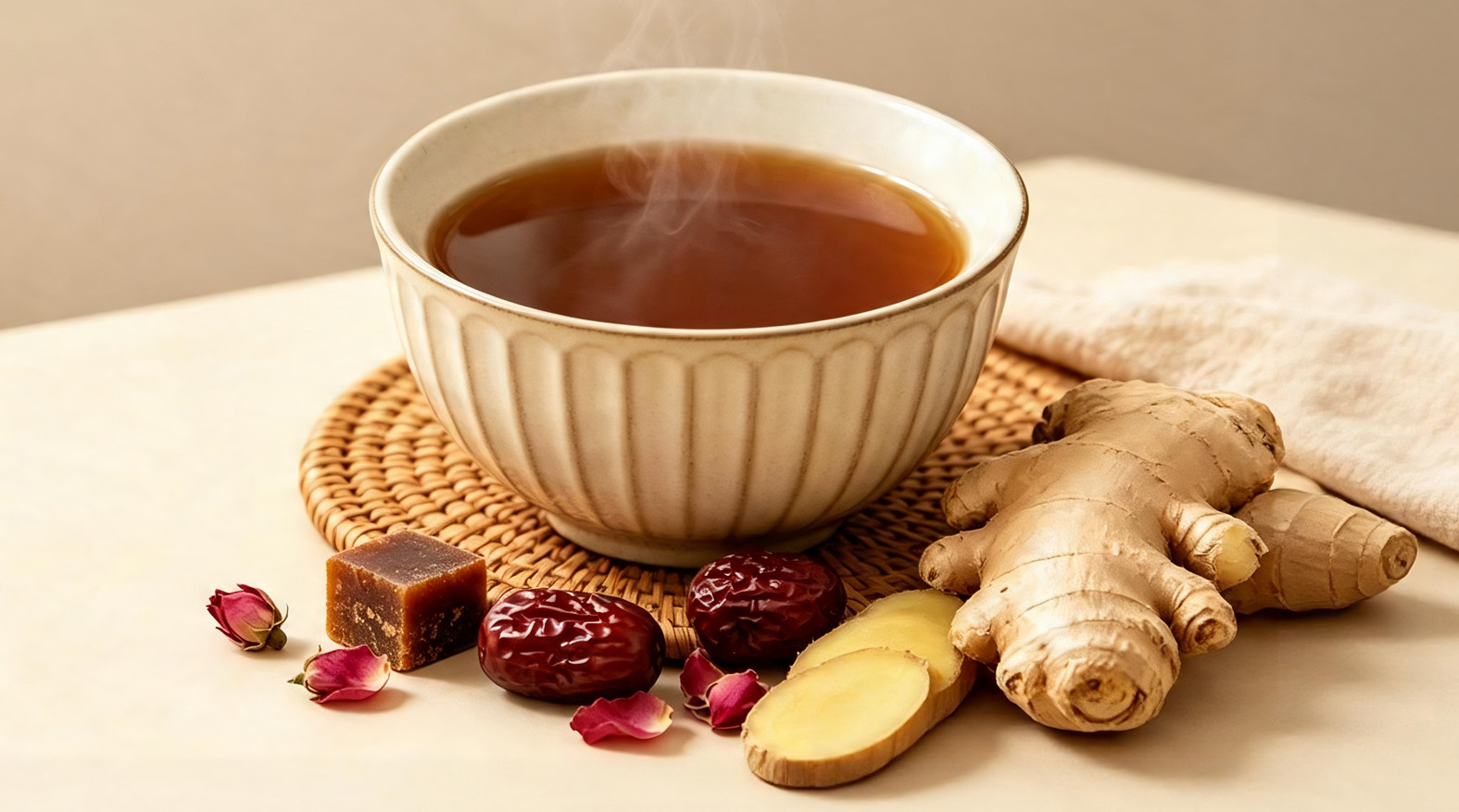
《 Professional Interpretation & Dietary Applications of Red Dates (Jujube) 》
1. Nature, Taste and Meridian Affiliation
Nature and Flavour: Sweet, Warm
Meridian Entered: Spleen, Stomach, Heart meridians
【Professional Interpretation】
Its sweet taste has tonifying, harmonizing, and moderating properties in TCM. It helps tonifying Middle Qi, nourish Nutritive Blood, and moderate the properties of other medicinal ingredients. The sweetness of red dates comes from their naturally occurring sugars, including glucose, fructose, and sucrose, as well as cyclic adenosine monophosphate (cAMP). These components provide a gentle and sustained source of energy, while red dates are traditionally regarded as nourishing the organs and the body as a whole.
Its warm nature gives red dates a warming quality, making them especially suitable for individuals with deficiency-cold patterns or blood deficiency. Their red colour, rounded form, and sweet taste are traditionally interpreted through the Five Elements relationship between Fire and Earth: red corresponds to the Heart and is associated with nourishing Blood, while sweet taste enters the Spleen and supports Qi. For this reason, red dates are traditionally valued for tonifying both Qi and Blood.
Their red skin and yellowish flesh are also viewed as reflecting the TCM concept of “Fire generating Earth.” The Heart governs the Blood and blood vessels, while the Spleen governs transformation and transportation. By tonifying the Heart and Spleen, red dates support the source of Blood production and provide a foundation for Qi.
As recorded in the Shennong Bencao Jing (Divine Farmer’s Classic of Materia Medica), jujube was traditionally described as helping to “harmonize the Middle and nourish the Spleen, support the twelve meridians, harmonize Stomach Qi, promote the free function of the nine orifices, and replenish insufficient Qi and Body Fluids.” Its nourishing reputation is also reflected in the traditional saying: “Eat three dates a day for longevity.”
2. Core Concepts in Traditional Chinese Medicine (TCM)
In TCM health preservation, the core value of Red Dates (Jujube) lies in “Tonifying the Middle and Replenishing Qi,” “Nourishing Blood and Calming the Mind,” and “Moderating the Properties of Other Medicinal Ingredients.”
Tonifies the Middle and Replenishes Qi
TCM regards the Spleen and Stomach as the “foundation of acquired constitution” and the source of Qi and Blood production. The yellowish flesh and sweet taste of red dates correspond to the Spleen and Stomach meridians, making them especially suitable for tonifying Spleen and Stomach Qi.
The Spleen governs transformation and transportation of nutrients, while the Stomach governs the receiving and retaining food and fluids. When the Spleen and Stomach function well, the essence derived from food and drink can be properly transformed, allowing Qi and Blood to be sufficiently produced and the limbs and body to be nourished.
Red dates are warm in nature and can help warm the Middle and dispel cold. They are traditionally used as supportive dietary therapy for patterns of Middle Qi Deficiency associated with Spleen and Stomach deficiency-cold, such as poor appetite, indigestion, fatigue, lack of energy, and loose stools. In TCM terms, they act like a gentle source of warmth for a weakened Spleen and Stomach, helping restore their ability to receive, transform, and transport nutrients.
Nourishes Blood and Calms the Mind
Red dates are red in colour and correspond to the Heart, while their sweet taste has a moderating effect. They are therefore traditionally valued in TCM for nourishing Blood and calming the Mind. The Heart governs the Blood and blood vessels and houses the mind. When Heart Blood is insufficient, symptoms may include palpitations, restlessness, insomnia, excessive dreaming, a pale complexion, and pale lips or nails.
By tonifying Heart and Spleen Qi, red dates indirectly support the production of Nutritive Blood. The Spleen is regarded as the source of Qi and Blood production; when the Spleen is strong, Blood can be adequately generated. When Blood is sufficient, the Heart is nourished and the mind can remain settled.
Red dates are traditionally used as a gentle and sustained form of dietary support for women experiencing Blood deficiency patterns, such as scanty, pale-coloured, or delayed menstruation, as well as restlessness and insomnia associated with insufficient Heart Yin during menopause. In the classical formula Gan Mai Da Zao Tang from the Jin Gui Yao Lue (Essential Prescriptions of the Golden Cabinet), red dates are a key ingredient used for their sweet, nourishing, moderating, Heart-nourishing, and Mind-calming properties.
Moderates the Properties of Other Medicinal Ingredients
Red dates are sweet and gentle in nature. In Chinese herbal formulas, they are often used as an envoy herb to moderate the harsh or strong actions of other medicinal ingredients and to protect Stomach Qi.
For example, in classical formulas such as Shi Zao Tang and Ting Li Da Zao Xie Fei Tang from the Shang Han Lun (Treatise on Cold Damage), red dates are included to protect the Middle Jiao and reduce the risk of strong fluid-draining or Qi-dispersing herbs damaging the Spleen and Stomach’s Vital Qi.
This function is rooted in the ability of red dates to tonify the Middle and replenish Qi. When Middle Qi is sufficiently supported, the body is better able to tolerate the strong actions of other medicinal ingredients.
“The Heart Governs Blood, the Spleen Keeps Blood Within the Vessels, and the Liver Stores Blood”
Red dates enter the Heart and Spleen meridians. By tonifying Heart and Spleen Qi, they indirectly support the generation and containment of Blood. When the Spleen is strong, it can properly keep Blood within the vessels and help prevent inappropriate bleeding. When Heart Blood is sufficient, the vessels are well nourished and the complexion appears healthy and rosy.
At the same time, the sweet taste of red dates has a moderating effect on the Liver. The Liver stores Blood and governs the free flow of Qi, while sweetness can help ease excessive tension in the Liver system. Red dates may therefore provide indirect support for symptoms associated with Liver Blood deficiency, such as muscle or tendon tightness and dry, brittle nails.
Their functions of tonifying the Middle and nourishing Blood work together: when Middle Qi is sufficient, the production of Qi and Blood is strengthened; when Blood is abundant, the Heart and Mind are properly nourished. This forms the fundamental TCM rationale behind the use of red dates in supporting deficiency and weakness.
3. Supporting Evidence from Modern Nutritional Science
Modern nutritional analysis suggests that many of the traditional uses of Red Dates (Jujube) may be associated with their distinctive nutritional and bioactive compounds:
Cyclic Adenosine Monophosphate (cAMP):
Red dates are among the plant foods known to contain some of the highest levels of cyclic adenosine monophosphate (cAMP). cAMP is an important intracellular signalling molecule involved in various physiological processes, including glycogen metabolism, fat breakdown, and smooth muscle activity. It can dilate blood vessels and improve microcirculation, providing a molecular-level perspective on the traditional TCM concept of “Nourishing Blood.” Improved microcirculation may support adequate blood and oxygen supply to peripheral tissues, contributing to a healthier-looking complexion. cAMP may also inhibit excessive platelet aggregation and help prevent thrombus formation.
- Iron and Nutrients Involved in Blood Formation:
Red dates provide iron (approximately 2–3 mg per 100 gm) and also contain vitamin C and organic acids, which may support dietary iron absorption. They additionally contain folate, vitamin B12 precursor substances, and cobalt, which are involved in the production of haemoglobin. This provides a nutritional perspective on their traditional use for Nourishing Blood, particularly for dietary support in individuals with iron-deficiency anaemia and those recovering from postpartum blood loss.
- Jujube Polysaccharides:
Jujube polysaccharides have significant immunomodulatory effects, including enhancing macrophage phagocytic activity, promoting lymphocyte proliferation, and supporting non-specific immune function. They have also been investigated for possible protective effects on liver cells and their role in promoting hepatic protein synthesis. These findings may help explain why red dates have traditionally been used as a nourishing food for people experiencing weakness, fatigue, or recovery after illness or surgery, which aligns with the TCM concept of Tonifying the Middle and Replenishing Qi.
- Flavonoids and Saponins:
Red dates contain various flavonoids, including compounds such as rutin and quercetin, as well as triterpenoid saponins. Flavonoids are known for their antioxidant activity and have been studied for their potential role in supporting cardiovascular and capillary health. They may help reduce capillary fragility and support the prevention of bleeding. Triterpenoid saponins and other jujube compounds have also been investigated for calming, anti-allergic, liver-protective, and other biological activities. Their calming effects may help support sleep quality and relieve feelings of anxiety. These findings may offer a modern scientific perspective on the traditional TCM use of red dates for Calming the Mind.
- Dietary Fibre and Organic Acids:
Red date flesh contains soluble dietary fibre, including pectin, as well as organic acids such as malic acid and tartaric acid. Soluble fibre including pectin may help bind substances in the intestinal tract, support the elimination of unwanted substances, and maintain normal bowel function, while organic acids may contribute to digestive processes and appetite. They may also support the breakdown of dietary proteins and fats. This is broadly consistent with the traditional TCM use of red dates to support the Middle Jiao and harmonize digestion.
【Additional Key Point】
A Gentle Food for Supporting Both Qi and Blood, with Calming Properties:
Red dates provide natural carbohydrates for energy, iron and other nutrients involved in normal Blood formation, provitamin A compounds, dietary fibre, and a range of bioactive substances such as cAMP, polysaccharides, flavonoids, and saponins.
From a TCM dietary therapy perspective, they are valued as a gentle food that supports both Qi and Blood while helping calm the Mind. They are considered an ideal dietary food for women during menstruation, postpartum recovery, recovery from illness-related weakness, and general wellness in middle-aged and older adults.
Their Warm nature is considered nourishing without being excessively drying or heavy. With regular and appropriate consumption, they are traditionally used to gradually support Qi and Blood, helping individuals with deficiency patterns maintain better vitality and a healthier-looking complexion.
4. Summary of Core Effects
- Tonifies the Middle and Replenishes Qi:
Suitable for Spleen and Stomach Qi deficiency patterns associated with a sallow complexion, fatigue, lack of energy, poor appetite, abdominal bloating after meals, and loose stools.
- Nourishes Blood and Calms the Mind:
Suitable for Heart Blood deficiency patterns associated with palpitations, insomnia, excessive dreaming, forgetfulness, mental restlessness, a pale complexion, and pale lips or nails.
- Warms the Meridians and Relieves Pain and Tension:
Suitable for dysmenorrhea associated with cold-induced Blood stasis, such as cold pain in the lower abdomen that improves with warmth, difficult menstrual flow, and dark menstrual blood with clots.
- Harmonizes the Nutritive and Defensive Qi:
Suitable for patterns involving constitutional weakness, susceptibility to illness, spontaneous sweating, night sweats, and disharmony between Nutritive Qi and Defensive Qi. It is commonly combined with fresh ginger in such applications.
5. Traditional Dietary Recipe with Modern Adaptation
Indications: Warms the Meridians and Dispels Cold, Relieves Tension and Pain, Nourishes Blood, and Promotes Circulation through the Meridians
Red Date Menstrual Warming Drink
Best Suited For:
Dysmenorrhea due to a cold-induced Blood stasis pattern — cold or cramping pain in the lower abdomen before or during menstruation, with pain relieved by warmth and aggravated by pressure; scanty menstrual flow that is dark in colour, contains clots, or is difficult to discharge; accompanied by cold hands and feet, aversion to cold with a preference for warmth, and aching or cold sensations in the lower back and knees. The tongue may appear dark or show stasis spots, with a white, slippery coating.
Ingredients (1–2 servings):
Red Dates (Jujube), Pitted – 5 pcs
Nature & Meridian:
Sweet, Warm; enters the Spleen, Stomach, Heart meridians
Benefits:
Tonifies the Middle and replenishes Qi, nourishes Blood and calms the Mind, and gently warms and promotes circulation through the vessels. It serves as the core nourishing ingredient in this formula.
Fresh Ginger, Unpeeled – 3 slices
Nature & Meridian:
Pungent, Slightly Warm; enters the Lung, Spleen, Stomach meridians
Benefits:
Warms the Middle and dispels cold, releases the exterior and promotes sweating, and warms the Lungs to relieve cough. Using ginger with the peel retained helps support fluid metabolism and moderates the drying nature of the ginger flesh, while traditionally helping to disperse cold from the Lower Jiao.
Brown Sugar – 15 gm
Nature & Meridian:
Sweet, Warm; enters the Liver, Spleen, Stomach meridians
Benefits:
Warms the Middle and nourishes Blood, relieves tension and pain, invigorates Blood and resolves Blood Stasis, and enhances the warming effect on the uterus.
Dried Rose Petals – 5 flowers
Nature & Meridian:
Sweet, Slightly Bitter, Warm; enters the Liver, Spleen meridians
Benefits:
Soothes the Liver and relieves constraint, invigorates Blood and regulates menstruation. It is particularly suitable when Qi stagnation and Blood stasis are also present, helping support smoother menstrual flow.
Hot Water – 500 ml
Preparation:
- Prepare the red dates by washing and removing the pits. Wash the unpeeled ginger, and prepare the brown sugar and dried rose petals.
- Place all ingredients into the iTAZZO i-Processor and blend at Speed 8 for 5 minutes until smooth.
Consumption Tips and Precautions
- Best Time:
- Begin 3–5 days before menstruation. Drink one warm serving of approximately 200–250 ml each morning on an empty stomach, preferably between 7–9 AM, traditionally associated with the Stomach meridian.
- During the Day 1–2 days of menstruation, when pain is usually most noticeable, an additional serving may be taken in the afternoon between 3–5 PM.
- In TCM dietary practice, consuming the drink on an empty stomach is traditionally believed to allow the warming properties of ginger and red dates to act more directly on the Middle Jiao and support the dispersion of cold. Drinking it after meals is traditionally considered to be less effective for this purpose.
- Frequency:
- For premenstrual regulation: Take once daily for 5–7 consecutive days, from approximately 3 days before menstruation until Day 2–3 of the menstrual period.
- For persistent dysmenorrhea: Use continuously across 3 menstrual cycles as one complete course.
- For those with scanty menstrual flow and frequent blood clots, it may be consumed throughout the menstrual period. Those with excessively heavy menstrual flow should stop from Day 3 onward.
- Important Reminder:
- 【Especially Recommended】 For individuals with cold-pattern dysmenorrhea, including cold lower-abdominal pain relieved by warmth and cold hands and feet; postpartum individuals experiencing incomplete lochia discharge accompanied by Cold signs; and those who develop early-stage cold symptoms during menstruation with aversion to cold and absence of sweating.
- 【Use with Caution】 Individuals with excessively heavy menstrual bleeding (>80 ml per cycle) or prolonged menstruation (>7 days) should use with caution, as the Blood-invigorating properties of brown sugar may potentially increase menstrual flow. Those with pronounced Stomach Heat signs, such as bad breath, swollen or painful gums, and constipation, should reduce the amount of ginger.
- Important Precautions:
- 【Expected Response】 Within approximately 15–30 minutes after drinking, some individuals may experience a gentle warming sensation in the lower abdomen that spreads toward the limbs. In TCM, this is traditionally regarded as a sign that Cold is being dispersed and Qi and Blood circulation is being warmed and promoted. If dryness of the throat or mouth, or swollen and painful gums occur after drinking, the warming effect may be excessive. In this case, reduce the ginger to 1–2 slices and reduce the brown sugar by half.
《 红枣的专业解读与食疗应用 》
一、 性味归经
性味: 甘,温
归经: 脾、胃、心经
【专业解读】
其“甘”味能补、能和、能缓,具有补益中气、滋养营血、缓和药性的作用。红枣之“甘”,源于其丰富的天然糖分(葡萄糖、果糖、蔗糖)及环磷酸腺苷(cAMP),能温和而持续地为人体补充能量,濡养脏腑百骸。
其“温”性使其性质温暖,尤宜于虚寒体质、血海空虚之人。红枣色赤,形圆,得火土相生之气最厚——赤色入心养血,味甘入脾益气,故能气血双补。其皮红肉黄,正应“火生土”之象,心主血脉,脾主运化,红枣通过补益心脾二脏,使血有化源,气有所依。正如《神农本草经》所载,大枣能“安中养脾,助十二经,平胃气,通九窍,补少气、少津液”,民间更以“日食三枣,长生不老”誉其补养之功。
二、 传统中医理论核心
在中医养生理论中,红枣的核心价值在于 “补中益气”、“养血安神” 与 “缓和药性”。
补中益气:
中医认为“脾胃为后天之本,气血生化之源”。红枣色黄(肉)味甘,入脾、胃二经,最能补益脾胃之气。脾主运化,胃主受纳,脾胃功能强健,则水谷精微化生有源,气血充盈,四肢百骸得以濡 养。红枣性温,能温中散寒,对于因脾胃虚寒导致的食欲不振、消化不良、神疲乏力、大便溏薄等 “中气不足”之证,有极佳的食疗调养作用。它如同给虚弱的脾胃添了一把温和的火,使其重新恢复腐熟运化之力。
养血安神:
红枣色赤入心,味甘缓急,是中医“养血安神”的要药。心主血脉,藏神明,若心血不足,则见心悸怔忡、失眠多梦、面色苍白、唇甲淡白。红枣通过补益心脾之气,间接化生营血——脾为气血生化之源,脾旺则血生,血足则心有所养,神有所安。对于妇女血虚所致的月经量少、色淡、延期,以及更年期心阴不足所致的烦躁不寐,红枣皆有温和而持久的调理作用。《金匮要略》中治妇人脏躁的 “甘麦大枣汤”,即以红枣为核心,取其甘润缓急、养心安神之功。
缓和药性:
红枣味甘性缓,在中药复方中常作为“使药”使用,能缓和峻烈药物的副作用,保护胃气。如《伤寒论》中十枣汤、葶苈大枣泻肺汤,皆以大枣顾护中焦,防止逐水、破气之药损伤脾胃正气。这一功效源于红枣补中益气的本质——中气充盛,则能耐受药力之冲击。
“心主血,脾统血,肝藏血”:
红枣归心、脾二经,能通过补益心脾之气,间接促进血液的生成与统摄。脾旺则血有所统,不致妄行;心血足则脉道充盈,面色红润。同时,红枣味甘入肝,肝藏血而主疏泄,甘味能缓肝急,对于肝血不足导致的筋脉拘挛、爪甲枯槁,亦有间接辅助之功。其“补中”与“养血”相辅相成——中气足则生化有力,血海充则心神得安,此为红枣调养虚损之根本逻辑。
三、 现代营养科学佐证
现代营养学分析表明,红枣的传统功效与其独特的化学成分密不可分:
- 环磷酸腺苷(cAMP):
红枣是已知植物中环磷酸腺苷含量最高的品种之一。cAMP 是细胞信号传导的重要分子,参与调节糖原代谢、脂肪分解、平滑肌收缩等多种生理活动。它能扩张血管、改善微循环,为中医“养血”功效提供了分子层面的解释——微循环改善意味着末梢组织供血供氧充足,面色自然红润。同时,cAMP 能抑制血小板过度聚集,有助于预防血栓形成。
- 铁与造血营养素:
红枣富含铁元素(每 100g 约含 2-3mg),且含有维生素 C 和有机酸,能促进铁的吸收转化。红枣还含有叶酸、维生素 B12 前体物质及钴元素,共同参与血红蛋白的合成。这为“养血补血”的传统功效提供了直接的营养学依据,尤其适合缺铁性贫血及产后失血者调理。
- 红枣多糖:
红枣多糖具有显著的免疫调节作用,能增强巨噬细胞吞噬能力,促进淋巴细胞增殖,提高机体非特异性免疫功能。同时,红枣多糖能保护肝细胞,促进肝脏蛋白质合成,对病后体虚、术后康复者有良好的支持作用。这与中医“补中益气”后体力恢复、抗病力增强的效果完全一致。
- 黄酮类与皂苷类化合物:
红枣中含有丰富的黄酮类物质(如芦丁、槲皮素)及三萜皂苷。黄酮类化合物具有抗氧化、清除自由基、保护心血管的作用,能降低毛细血管脆性,预防出血。三萜皂苷则具有镇静、抗过敏、护肝等活性,为“安神”功效提供了科学解释——其镇静作用有助于改善睡眠质量,缓解焦虑情绪。
- 膳食纤维与有机酸:
红枣果肉富含可溶性膳食纤维(果胶)和多种有机酸(苹果酸、酒石酸等)。果胶能吸附肠道毒素,促进有害物质排出,同时温和刺激肠道蠕动,改善便秘。有机酸能促进消化液分泌,增进食欲,帮助分解食物中的蛋白质和脂肪,这与“补中、开胃”的传统作用相呼应。
【补充关键点】温和的“气血双补剂”与“神经安抚剂”:
红枣兼具快速供能(天然糖分)、促进造血(铁+cAMP)、保护黏膜(维生素 A 前体)、稳定神经(cAMP+皂苷)四大功能,是一种理想的妇女经期调理、产后恢复、病后体虚及中老年保健食材。其性温不燥,补而不腻,缓缓充盈气血,持之以恒则面色由萎黄转红润,精神由疲惫转充沛。
四、核心功效总结
- 补中益气: 针对面色萎黄、神疲乏力、食欲不振、食后腹胀、大便稀溏等脾胃气虚证。
- 养血安神: 针对心血不足所致的心悸怔忡、失眠多梦、健忘恍惚、面色苍白、唇甲淡白。
- 温经缓急: 针对寒凝血瘀所致的痛经(小腹冷痛、得热痛减)、经行不畅、经血色暗夹块。
- 调和营卫: 针对体虚易感、自汗盗汗、营卫不和之证(常配伍生姜同用)。
五、食疗古方新制
主治:温经散寒,缓急止痛,养血通脉
红枣~经期温通饮
最佳体征:
寒凝血瘀型痛经——经前或经期小腹冷痛、绞痛、得热痛减、按之痛甚;经血量少、色暗有块、排出不畅;伴手足不温、畏寒喜暖、腰膝酸冷;舌质暗或有瘀点,苔白滑。
食材(1-2 人份):
红枣(去核):5 颗
性味归经:甘,温;归脾、胃、心经。
功效:补中益气,养血安神,温通血脉,为全方核心补益之品。
生姜(带皮):3 片
性味归经:辛,微温;归肺、脾、胃经。
功效:温中散寒,解表发汗,温肺止咳。带皮使用,皮主行水,防姜肉过燥伤阴,尤善驱散下焦寒邪。
红糖:15 gm
性味归经:甘,温;归肝、脾、胃经。
功效:温中补血,缓急止痛,活血化瘀,增强暖宫效果。
玫瑰花瓣(干品):5 朵
性味归经:甘、微苦,温;归肝、脾经。
功效:疏肝解郁,活血调经,针对气滞血瘀之兼证,助经血畅行。
热水:500 ml
做法:
- 准备红枣(洗净去核)、生姜(带皮、洗净)、红糖与玫瑰花备用。
- 所有食材放入 iTAZZO 智能养生机,设定档速8号搅打5分钟至细腻即可。
饮用宜忌与温馨提示
黄金饮用时间:
经前 3-5 天开始,每日早晨(辰时,7-9 点,胃经当令)空腹温饮一杯(约 200-250ml)。经期第 1-2 天疼痛最为明显时,可于下午(申时,3-5 点)加饮一次。空腹状态下姜枣温热之力直入中焦,驱寒效果最佳;饭后饮用则功效减半。
饮用频率与疗程:
经前期调理: 每日 1 次,连用 5-7 天(从经前 3 天至经期第 2-3 天)。顽固性痛经: 连续使用 3 个月经周期为一完整疗程。若经量偏少、血块多者,整个经期均可饮用(经量过大者经期第 3 天起停用)。
核心提醒:
【特别推荐】寒性痛经者(小腹冷痛、得热痛减、手足冰凉)、产后恶露排出不畅兼寒证者、经期感冒初起畏寒无汗者。
【慎用人群】经量过大(>80ml/周期)、经期延长(>7 天)者慎用(红糖活血可能加重);胃热炽盛(口臭、牙龈肿痛、便秘)者减生姜用量。
重要注意事项:
【预期反应】 饮后约 15-30 分钟,觉小腹有温热感向四肢扩散,此为寒邪外散、气血温通之佳兆。若饮后觉咽干口燥、牙龈肿痛,属温补太过,可减生姜至 1-2 片,红糖减半。