< Professional Interpretation & Dietary Applications of Bitter Melon >
1. Nature, Taste and Meridian
Nature and Taste: Bitter, cold
Meridian Entered: Heart, Spleen, Stomach, Liver meridians
【Professional Interpretation】
The bitter taste of bitter melon has clearing, drying, and consolidating properties in TCM. It is therefore traditionally used to clear heat and drain fire, relieve irritability, and alleviate thirst. Its cold nature helps counter excessive heat, making it particularly suitable for patterns involving damp-heat, summer-heat, Liver fire, and internal dry-heat associated with excessive thirst.
Its green colour is traditionally associated with the Liver, supporting its use for clearing Liver heat and improving vision. Its bitter taste corresponds to the Heart and is traditionally used to clear Heart fire and relieve irritability. Its cold nature helps clear stomach heat, promote body fluids, and relieve thirst.
By entering the Spleen and Stomach meridians, bitter melon helps clear damp-heat from the Middle Jiao. By entering the Heart and Liver meridians, it helps drain excessive Heart and Liver fire.
Its overall TCM character is defined by its bitter and cold nature, with clearing and descending properties, making bitter melon a commonly used heat-clearing food in Malaysia’s hot and humid climate.
2. Core Concepts in Traditional Chinese Medicine (TCM)
In TCM health preservation, the core value of bitter melon lies in Clearing Heat and Relieving Irritability, Promoting Body Fluids and Relieving Thirst, Clearing the Liver and Improving Vision, Promoting Urination and Relieving Painful Urination, and Detoxifying.
Clears Heat and Promotes Body Fluids, Traditionally Used for “Xiao Ke消渴”:
In TCM, “Xiao Ke消渴” is a traditional condition associated with diabetes, is commonly characterised by excessive thirst, hunger, and urination, and is often discussed in relation to diabetes. One of its key underlying mechanisms is dry-heat damaging body fluids. Bitter melon is bitter and cold, helping to clear Stomach heat and drain Heart fire. When excessive heat is cleared, body fluids are better preserved. Its bitter taste may also stimulate saliva production, helping to promote body fluids and relieve thirst.
For individuals experiencing excessive thirst and drinking, frequent hunger, increased urination, irritability, or similar symptoms associated with dry-heat or Qi and Yin deficiency accompanied by heat, bitter melon may be used as a supportive everyday food as part of dietary care.
Clears the Liver and Improves Vision, Traditionally Used for Red and Painful Eyes:
In TCM, the Liver opens into the eyes, and redness, swelling, or pain of the eyes may be associated with Liver fire flaring upward. Bitter melon enters the Liver meridian and, through its bitter and cold nature, helps clear Liver heat and drain fire. When excessive Liver fire is reduced, symptoms such as red and painful eyes may subside.
For individuals experiencing dry or irritated eyes, sensitivity to light, tearing, a bitter taste in the mouth, dry throat, irritability, or a tendency toward anger, bitter melon may be combined with chrysanthemum, goji berries, and carrot to help clear Liver fire, nourish Liver Blood, and improve vision.
Clears Heart Fire and Promotes Urination, Traditionally Used for Scanty, Dark Urine:
In TCM, the Heart and small Intestine are internally and externally related. When Heart fire transfers downward to the small Intestine, symptoms may include scanty, dark-yellow urine or a burning sensation during urination. Bitter melon enters the Heart meridian and helps clear Heart fire. Its cold nature also helps clear heat and drain dampness, allowing accumulated Heat to be discharged through urination. When combined with corn silk and coix seed, it may further support urination, relieve painful urination, and clear damp-heat. This combination is traditionally considered suitable for people who drink insufficient water and experience scanty, dark urine during Malaysia’s hot weather.
Detoxifies:
Bitter melon is traditionally used to clear heat and detoxify. In folk dietary practices, it has also been used for conditions associated with damp-heat and fire-toxin, such as acne, heat rash, sores and abscesses. Its seeds, fruit flesh, and leaves have each been traditionally used to varying degrees for their heat-clearing and detoxifying properties.
3. Supporting Evidence from Modern Nutritional Science
Modern nutritional research suggests that many of the traditional uses of bitter melon may be associated with its distinctive bioactive compounds and nutritional profile:
- Charantin: Charantin is a group of steroidal saponins found in bitter melon and has been studied for its potential role in glucose metabolism. Some studies of bitter melon preparations or extracts have reported modest improvements in fasting blood glucose and HbA1c. However, the glucose-lowering effect of eating bitter melon as a food is generally limited and variable, and it should not be used as a replacement for prescribed diabetes medication.
- Polypeptide-P: Polypeptide-P is an insulin-like peptide identified in bitter melon. It has demonstrated glucose-lowering activity in experimental and animal studies. However, because peptides may be broken down by digestive enzymes when taken orally, its actual effect in humans through normal dietary consumption may be limited.
- Saponins and Flavonoids: Bitter melon contains various saponins and flavonoids that have been studied for their antioxidant, anti-inflammatory, and regulating potential. These bioactive compounds may help support metabolic health and reduce metabolic inflammation.
- Vitamin C: Bitter melon is a relatively good source of vitamin C. Vitamin C functions as an antioxidant and supports blood vessel health and the integrity of mucosal tissues.
- Potassium: Bitter melon is naturally high in potassium and low in sodium. Approximately 100 gm contains around 256 mg of potassium and only about 2.5 mg of sodium. Its relatively high potassium-to-sodium ratio may help support sodium-potassium balance and blood pressure regulation as part of an overall balanced diet.
- Dietary Fibre and Pectin: Bitter melon provides dietary fibre, including soluble fibre and pectin. Soluble fibre can help slow carbohydrate absorption, promote satiety, and support regular bowel movements.
- Bitter Melon Seed Proteins: Bitter melon seeds contain bioactive proteins, including trypsin inhibitors and other compounds that have been investigated for possible effects on glucose and lipid metabolism. However, current evidence is largely experimental, and more human research is needed before firm conclusions can be drawn.
【Additional Key Point】
Bitter melon is traditionally regarded as a supportive food that clears heat without excessively weakening Vital Qi and drains dampness without excessively damaging Yin. It is particularly suitable for individuals with damp-heat patterns, dry-heat associated with “Xiao Ke消渴”, Liver fire with red eyes, or scanty, dark urine.
However, because bitter melon is cold in nature, individuals with Spleen and Stomach deficiency-cold should avoid consuming it raw or in large amounts over a prolonged period.
It is also important to note that much of the modern research on bitter melon has involved concentrated extracts or bitter melon peptide supplements rather than ordinary dietary intake. Therefore, everyday consumption of bitter melon is best regarded as a low-glycaemic vegetable and a supportive dietary food, rather than a substitute for medication or medical treatment.
4. Summary of Core Effects
- Clears Heat and Promotes Body Fluids: Suitable for “Xiao Ke 消渴” conditions associated with diabetes, excessive thirst and drinking, summer-heat with irritability and thirst, dry mouth, and a bitter taste in the mouth.
- Clears the Liver and Improves Vision: Suitable for red, swollen or painful eyes, dry or irritated eyes, sensitivity to light, tearing and Liver fire flaring upward.
- Promotes Urination and Relieves Painful Urination: Suitable for scanty, dark urine, a burning sensation during urination, and damp-heat patterns affecting the urinary system.
- Detoxifies: Suitable for acne, heat rash, and skin conditions associated with damp-heat and fire-toxin patterns.
- Supports Blood Glucose Management: As a low-glycaemic vegetable, bitter melon may be incorporated into a diabetes-friendly dietary plan as a supportive food.
5. Traditional Dietary Recipe with Modern Adaptation
Indications: Supportive dietary care for red, swollen, or painful eyes, eye fatigue, and Liver fire flaring upward
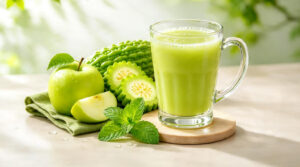
Bitter Melon Liver-Clearing & Vision-Supporting Drink
Best Suited For:
Red, swollen, or painful eyes, dry or irritated eyes, sensitivity to light, tearing, a bitter taste in the mouth, dry throat, irritability, constipation, and a red tongue with a yellow coating.
Ingredients (1 serving):
1. Bitter Melon – 80gm
- Nature & Meridian: Bitter, cold; Heart, Spleen, Stomach, Liver meridians
- Benefits: Clears Liver heat and drains fire, improves vision, and detoxifies.
2. Carrot – 60 gm
- Nature & Meridian: Sweet, neutral; Lung, Spleen, Liver meridians
- Benefits: Nourishes the Liver and improves vision. It is rich in beta-carotene.
3. Dried Chrysanthemum Flowers – 5 flowers
- Nature & Meridian: Sweet, bitter, slightly cold; Lung, Liver meridians
- Benefits: Clears the Liver and improves vision and disperses wind-heat.
4. Warm Water – 300 ml
Preparation:
- Wash the carrot and cut it into small cubes. Soak the dried chrysanthemum flowers in a small amount of warm water, then set aside together with the soaking water.
- Remove the pith and seeds from the bitter melon and slice it. Toss with a small amount of salt and leave for 5 minutes, then rinse to reduce the bitterness.
- Place all ingredients into the iTAZZO i-Processor and blend at Speed 8 for 2 minutes until smooth. Serve immediately.
Consumption Tips and Precautions:
- Best Time: Consume between 3–5 PM or after breakfast.
- Frequency: Consume once daily for 5–7 consecutive days. For regular eye care, consume 2–3 times per week.
- Especially Recommended: For individuals who overuse their eyes, experience red eyes associated with Liver fire, or have dry eyes during hazy weather.
- Use with Caution: Pregnant women and women during menstruation should use with caution.
- Important Reminder: If red, swollen, or painful eyes are accompanied by high fever, headache, or vomiting, seek medical attention immediately. This drink is intended only as supportive dietary care and should not replace professional ophthalmic treatment.
《苦瓜的专业解读与食疗应用》
一、性味归经
性味:苦,寒。
归经:心、脾、胃、肝经。
【专业解读】
苦瓜之“苦”能清、能燥、能坚,故能清热泻火、除烦止渴;其“寒”能制热,适合湿热、暑热、肝火及消渴燥热之证。苦瓜色青绿,青绿入肝,故能清肝明目;味苦入心,故能清心除烦;性寒入胃,故能清胃热、生津止渴。苦瓜归脾、胃经,能清中焦湿热;归心、肝经,能泻心肝之火。苦瓜以“苦寒清降”为特点,是马来西亚湿热气候下常用的清热食材。
二、传统中医理论核心
- 中医养生理论中,苦瓜的核心价值在于 清热除烦、生津止渴、清肝明目、利尿通淋、解毒。
- 清热生津,主治消渴:消渴(糖尿病的中医对应病名)核心病机之一为“燥热伤津”。苦瓜苦寒清热,能清胃热、泻心火,热清则津液自保;其苦味又能刺激唾液分泌,起到生津止渴之效。对于口渴多饮、多食易饥、尿频量多、烦躁等属燥热或气阴两虚兼热者,苦瓜可作为日常辅助食材。
- 清肝明目,主治目赤肿痛:肝开窍于目,目赤肿痛多因肝火上炎。苦瓜入肝经,苦寒清肝泻火,火降则目赤自消。对于眼干涩、畏光流泪、口苦咽干、烦躁易怒者,苦瓜搭配菊花、枸杞、胡萝卜,可清肝火、养肝血、明目窍。
- 清心利尿,主治小便短赤:心与小肠相表里,心火下移小肠,则见小便短赤、排尿灼热。苦瓜入心经,能清心泻火;其性寒又能清热利湿,使热从小便而出。搭配玉米 须、薏米,可增强利尿通淋、清热利湿之力,适合马来西亚炎热天气下饮水不足、小便短赤者。
- 解毒:苦瓜能清热解毒,民间也用于痤疮、热痱、疮痈等湿热火毒之证。其种子、果肉、叶片均有不同程度的清热解毒作用。
三、现代营养科学佐证
现代营养学分析表明,苦瓜的传统功效与其独特成分密切相关:
- 苦瓜苷(Charantin):被认为有类胰岛素样作用,可能参与血糖调节。多项研究显示苦瓜提取物对空腹血糖和糖化血红蛋白有一定改善趋势,但直接食用苦瓜的降糖幅度有限,不能替代降糖药。
- 多肽-P:苦瓜中一种胰岛素样多肽,动物实验中显示降糖活性,但口服后可能被消化酶分解,实际人体作用有限。
- 皂苷与黄酮类:具有抗氧化、抗炎、调脂潜力,有助于减轻代谢性炎症。
- 维生素 C:苦瓜维生素 C 含量较高,抗氧化,保护血管和黏膜。
- 钾:苦瓜高钾低钠,每 100g 含钾约 256mg,钠仅约 2.5mg,钾/钠比值高,有助于钠钾平衡和血压调节。
- 膳食纤维与果胶:可溶性纤维能延缓糖分吸收,增加饱腹感,促进肠道蠕动。
- 苦瓜籽蛋白:苦瓜籽含胰蛋白酶抑制剂等成分,研究显示其可能影响糖脂代谢,但需更多人体证据。
【补充关键点】
苦瓜是“清热不伤正、利湿不伤阴”的辅助食材,适合湿热体质、消渴燥热、肝火目赤、小便短赤者。但其性寒,脾胃虚寒者不宜长期生饮。现代研究多基于浓缩提取物或苦瓜肽补充剂,日常食用苦瓜应定位为“低升糖指数蔬菜”和“辅助调理食材”,而非药物替代品。
四、核心功效总结
- 清热生津:针对糖尿病消渴、口渴多饮、暑热烦渴、口干口苦。
- 清肝明目:针对目赤肿痛、眼干涩、畏光流泪、肝火上炎。
- 利尿通淋:针对小便短赤、排尿灼热、泌尿系统湿热。
- 解毒:针对痤疮、热痱、皮肤湿热火毒。
- 辅助控糖:作为低升糖指数蔬菜,纳入糖尿病饮食计划。
五、食疗古方新制
主治:辅助调理目赤肿痛、眼疲劳、肝火上炎
苦瓜~清肝明目饮
最佳体征:目赤肿痛、眼干涩、畏光流泪、口苦咽干、烦躁易怒、大便干结、舌红苔黄。
食材(1 人份):
1. 苦瓜 80 gm
- 性味归经:苦,寒;归心、脾、胃、肝经。
- 功效:清肝泻火,明目解毒。
2. 胡萝卜 60 gm
- 性味归经:甘,平;归肺、脾、肝经。
- 功效:补肝明目,富含 β-胡萝卜素。
3. 干菊花 5 朵
- 性味归经:甘、苦,微寒;归肺、肝经。
- 功效:清肝明目,疏散风热。
4. 温水 300 ml
做法:
- 胡萝卜洗净、切丁。干菊花先用少量温水泡开,连花和水一同保留备用。
- 苦瓜去瓤去籽,切片,少许盐抓匀 5 分钟,冲洗去苦。
- 全部放入iTAZZO 智能养生机机,设定档速8号搅打2分钟至细腻即可饮用。
饮用宜忌与温馨提示:
- 黄金饮用时间:下午 3—5 点或早餐后。
- 饮用频率:每日 1 次,连 5—7 天;日常护眼每周 2—3 次。
- 特别推荐:用眼过度、肝火目赤、烟霾季眼干者。
- 慎用人群:孕妇、经期女性慎用。
- 核心提醒:目赤肿痛若伴高热、头痛、呕吐,立即就医。本方为辅助调理,不能替代眼科治疗。